
Rockwool Radiant Barrier Installation: The San Diego Owner’s Guide
Rockwool radiant barrier installation in San Diego typically runs $1,200 – $2,800 installed, depending on attic square footage, access difficulty, and whether we’re pairing it with new Rockwool batt insulation or retrofitting around existing material. We stock radiant barrier rolls sized for Rockwool systems on our trucks, so in most San Diego neighborhoods we can handle the job same-day or next-day. Most homeowners discover their radiant barrier has failed the same way: an attic that suddenly feels like a furnace in August, or a utility bill that jumped $40 – $60 a month without explanation.
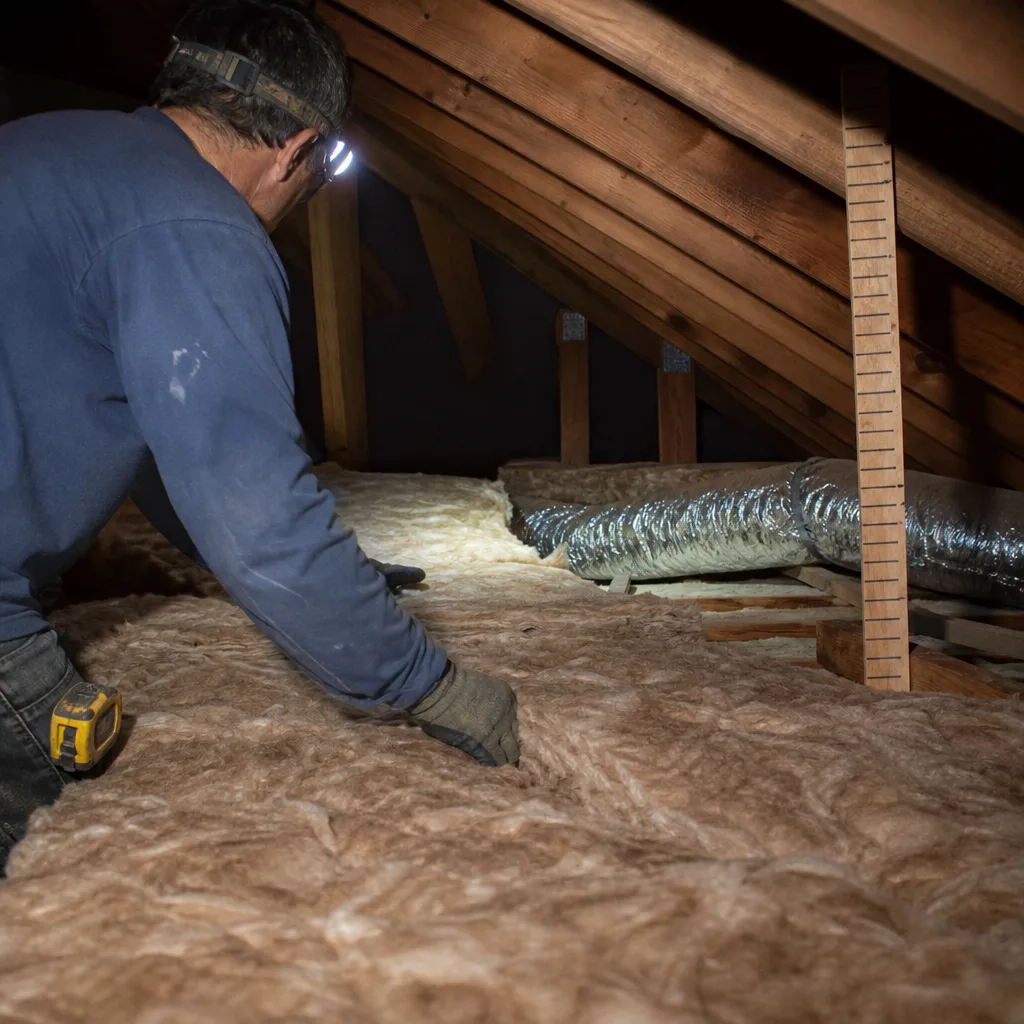
Here’s the plain-language version of what’s happening. Rockwool slows heat transfer through your ceiling, but a radiant barrier does a different job: it reflects radiant heat back toward the roof before it ever reaches your insulation. When that barrier tears, sags, or was never installed correctly to begin with, your Rockwool ends up absorbing heat it shouldn’t have to fight. The result is an air conditioner working overtime and an upstairs that won’t hold temperature past 3 p.m.
Key Takeaways:
- Radiant barrier works differently from Rockwool insulation; it reflects heat rather than slowing conduction.
- Most San Diego installs are $1,200 – $2,800, and we provide a written price before any work starts.
- We stock radiant barrier material compatible with Rockwool batt and board systems on the truck.
- Every install carries our 365-Day Done Right Promise and a free second visit if anything fails.
Which Rockwool Models This Applies To
Radiant barrier installation applies to any attic where Rockwool products are present, but the specifics change depending on what you have up there. If you’ve got Rockwool Comfortbatt or Safe’n’Sound batts in your ceiling joists, the barrier installs above them, stapled to the underside of your rafters. If you have Rockwool Comfortboard in a vented attic assembly, the barrier placement matters even more because board products are denser and need proper air channeling to work as designed.
Here’s the compatibility gotcha most people don’t know: you cannot lay radiant barrier directly on top of Rockwool batts and call it done. That traps moisture between the two layers, which in coastal San Diego humidity leads to mold inside your insulation within a year or two. The barrier needs an air gap. This is the number-one DIY mistake we fix in older San Diego homes from Point Loma to El Cajon, and it’s the reason our crew measures rafter spacing and existing insulation depth before quoting anything.
We use professional-grade single and double-sided radiant barrier material, not the thin perforated rolls sold at big-box stores that degrade under San Diego’s relentless sun exposure. When it comes to OEM versus aftermarket, there is no “Rockwool-branded” radiant barrier; Rockwool manufactures insulation, not reflective barriers. What matters is spec: perforated versus solid, emissivity rating, and reinforcement. We match those specs to your attic’s ventilation and your existing Rockwool product rather than grabbing whatever happens to be in the truck.
Signs Your Rockwool Radiant Barrier Installation Is Failing
- Your attic is noticeably hotter than the outside air. A working radiant barrier keeps attic temps 20 – 30 degrees cooler than ambient. When the barrier has torn or sagged, the heat pours straight through and soaks your Rockwool. You’ll feel the difference the moment you open the attic hatch.
- Your upstairs rooms won’t hold temperature after mid-afternoon. Rockwool fights conduction, but radiant heat is a different animal. When the barrier fails, that late-day heat has no reflection layer stopping it from pushing through your ceiling. Your AC starts losing a battle it should be winning.
- Visible tears, gaps, or foil that’s lost its shine. Radiant barrier only works when the reflective side faces an air gap. Dust build-up, rodent damage, or installs where the foil is pressed flat against the roof deck all reduce reflectivity to near zero. Shine matters more than thickness.
- Condensation stains on the underside of your roof deck. This is the moisture problem we mentioned earlier. When barrier is installed without proper ventilation or laid flat on top of insulation, it traps vapor. In San Diego’s coastal zones, that shows up as staining first and mold second.
- Your energy bills have crept up with zero change in usage habits. Chase Whitaker has walked enough San Diego attics to know this is usually the quiet signal homeowners notice three months after the barrier stopped doing its job. Good insulation doesn’t announce itself, and a failing radiant barrier doesn’t either until the bill shows up.
Replacement Cost & What’s Included
Here’s what you should actually expect to pay in San Diego for radiant barrier installation paired with or preserving Rockwool insulation:
- Small attic (400 – 800 sq ft): $1,200 – $1,600
- Mid-size attic (800 – 1,500 sq ft): $1,500 – $2,200
- Large or complex attic (1,500+ sq ft, low clearance, or vaulted sections): $2,200 – $2,800
Those ranges include the barrier material, foil tape, staples, cleanup, and our labor. What moves you toward the higher end: attic access through a small interior closet hatch, existing ductwork we need to work around, or electrical and lighting fixtures that require careful cutting and sealing. What moves you down: a wide-open attic with standing room and crew-friendly access.
Every estimate comes to you as a written price before work starts, not a verbal ballpark that changes at the door. The install includes a written guarantee, and it’s backed by our 365-Day Done Right Promise. If the barrier fails within a year because we made a mistake, we come back and fix it. If it fails a second time, the second visit is free, no argument.
DIY or Call Us?
Here’s our honest take on doing this yourself. You can absolutely inspect your own attic: check for tears, sagging foil, missing staples, and whether the reflective side is actually facing down toward an air gap. What you should not attempt is a full removal and re-install. Attics in San Diego hit 140 – 160 degrees in summer months, and working in that heat without proper hydration, ventilation, and pace discipline puts you at real risk of heat exhaustion. We’ve also seen homeowners staple directly through wiring, compress Rockwool batts by crawling over them repeatedly, and staple barrier material over recessed light housings, which is a fire hazard. If the barrier is touching a non-IC-rated light fixture, that needs to be off-limits and handled correctly.
If you walk your attic and find torn foil, a sagging install, or barrier that’s shiny-side-up against the roof deck, call us at (619) 793-3676. We’ll send someone out to measure, give you a written price, and handle the job in a day. The inspection and quote are free.
FAQs
A properly installed radiant barrier lasts 15 – 25 years in San Diego’s climate. The key variables are attic ventilation, whether critters have access, and whether the material is perforated (which resists moisture) or solid foil (which traps it). Coastal humidity shortens the lifespan on lower-quality single-sided material, which is why we spec reinforced, perforated barrier for most San Diego attics. Call (619) 793-3676 and we’ll tell you honestly whether yours needs full replacement or a targeted repair.
Sometimes, yes. If the damage is limited to one section, say a 4-foot tear or a corner that pulled free from the rafters, we can patch and resecure it for a fraction of the replacement cost. If the barrier has lost its reflectivity due to dust buildup or age, patching won’t restore performance; replacement is the right call. We give you a straight answer once we see the attic, and we never upsell a full replacement when a patch will do.
A standard radiant barrier installation in a San Diego attic takes 3 – 6 hours for our crew, depending on square footage and obstacles. Most jobs are done in a single visit. You get a live arrival time through the Relay Standard, so there’s no vague four-hour window. Before-and-after photos come with every job so you can see exactly what we did. Call (619) 793-3676 to schedule around your calendar, not ours.
Yes. Our trucks carry reinforced single and double-sided radiant barrier material that works with Rockwool batts, boards, and loose-fill systems, plus the foil tape and fasteners we need for clean installs around ductwork, vents, and wiring. If your setup needs a specialty material from one of our other supplier brands, like Reflectix, we can source it same-week. We also work with materials from Owens Corning, Johns Manville, Knauf, CertainTeed, Icynene, and Demilec when a job calls for a different approach.
Get a Straight Answer and a Written Price
If your Rockwool radiant barrier has failed, or you suspect it’s underperforming based on what you’ve read here, the next step is simple. Call Laurel Attic Insulation San Diego at (619) 793-3676. You’ll reach a live person, not a voicemail. We’ll get you on the schedule, send a background-checked technician to your door at a live, trackable time, and hand you a written price before anything gets installed. That’s how we’ve operated since 2003 as part of the Relay Home Co. family, and it’s the only way we know how to work.
Written by Chase Whitaker, Owner, Laurel Attic Insulation San Diego at Laurel Attic Insulation San Diego, serving San Diego and nearby areas.