
Knauf Attic Insulation: The San Diego Owner’s Guide
We stock and install Knauf attic insulation throughout San Diego, with most full-attic jobs running $1,400 to $3,200 depending on square footage and the R-value your home actually needs. You’ll usually get same-day or next-day service, and every quote is a written price before we start. Here’s the scene we see most often: you open the attic hatch in August, the air feels like a furnace, and the Knauf batts you put in ten years ago look thin, flattened, or pulled back from the eaves. That’s how owners discover their insulation has quit doing its job.
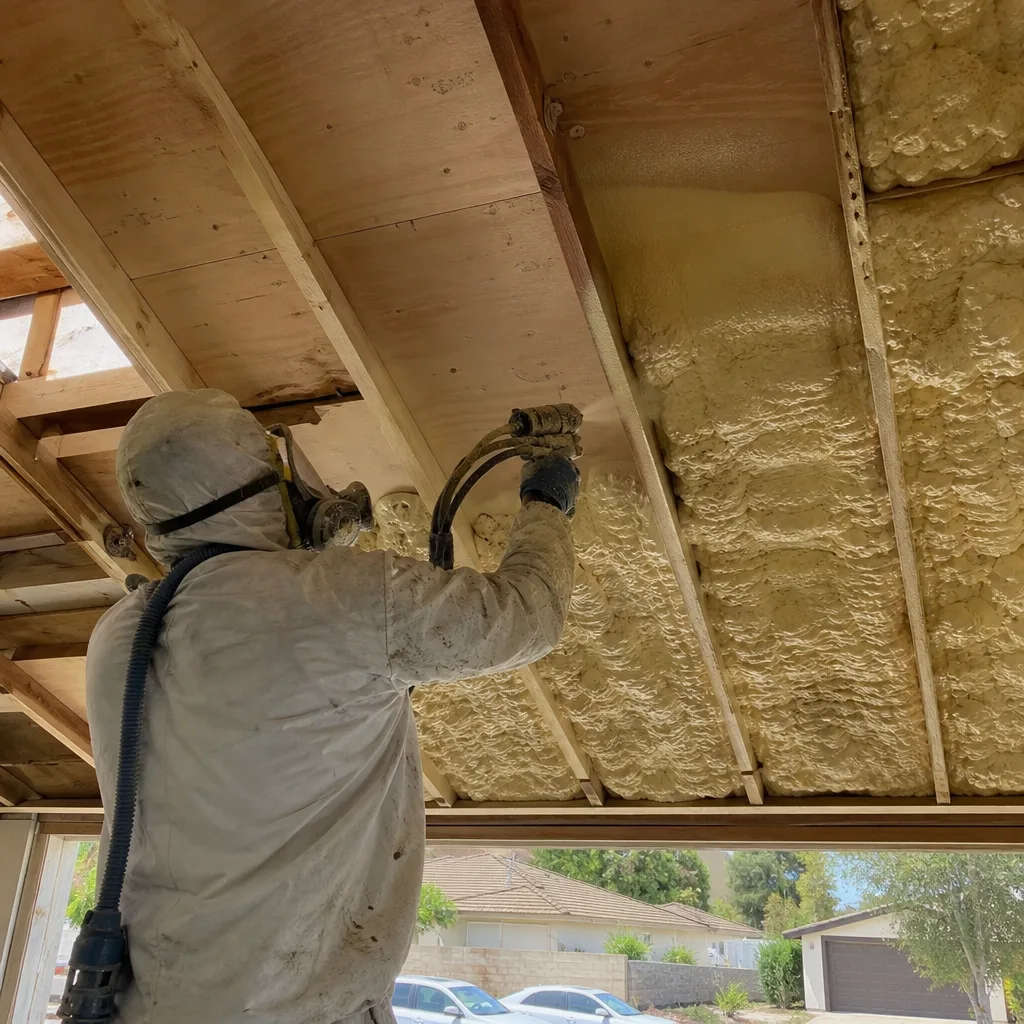
Older Knauf fiberglass batts lose loft over time, especially in San Diego’s coastal humidity and inland heat swings. When the fibers compact, the trapped air pockets that do the actual insulating disappear. The material is still there. It just isn’t stopping heat anymore. Chase Whitaker has pulled failed Knauf batts out of attics from El Cajon to Encinitas, and the failure pattern is consistent: the product wore out silently, and the homeowner’s AC bill was the first thing to notice. Good insulation doesn’t announce itself – you just stop noticing your energy bill. When that bill climbs with no change in usage, the attic is usually the culprit.
Which Knauf Models This Applies To
Knauf makes three attic insulation lines you’ll find in San Diego homes: EcoBatt (fiberglass batts), EcoRoll (unfaced rolls for attics), and Jet Stream (blown-in fiberglass). Each has different compatibility considerations. EcoBatt comes with or without a kraft-paper vapor barrier, and that facing matters: in San Diego’s marine climate, unfaced batts are the right call for attic floors because a vapor barrier in the wrong place traps moisture against drywall. We see that mistake on jobs where a homeowner or handyman bought whatever was cheapest at the big-box store.
The fastest way to identify what you have is to check the facing. Knauf prints its name and the R-value directly on the kraft paper of faced batts. Unfaced batts and rolls won’t have a label once out of the bag, so you’re looking for yellow or brown fiberglass with a consistent, uniform density. If the material is pink, you have Owens Corning. If it’s white and fluffy, it might be Johns Manville. Knauf’s EcoBatt has a slightly denser, stiffer feel than bargain fiberglass because it uses their ECOSE binder instead of formaldehyde. For replacement, we match the existing R-value and cavity width. R-30 is the minimum for San Diego attic floors under California Title 24, and most homes we work on are upgrading from R-19 or R-13 on their way to R-38 or R-49. We stock Knauf EcoBatt in R-30 and R-38 on the truck, along with EcoRoll for wide-open attic spaces. We also keep Reflectix radiant barrier on hand for homes where the roof deck radiates heat straight into the living space – a material from a different manufacturer that pairs well with Knauf in our climate.
One compatibility gotcha worth knowing: Knauf EcoBatt widths are sized for standard framing, 15 inches for 16-inch on-center joists and 23 inches for 24-inch on-center joists. If your attic has non-standard spacing, which we see regularly in older San Diego bungalows and Hillcrest craftsman homes, you can’t just force a wider batt in. Compression kills R-value faster than most people realize. We cut to fit where needed or switch to Jet Stream blown-in, which fills irregular cavities without gaps. And for the record, Laurel Attic Insulation San Diego is an independent insulation contractor. We’re not affiliated with Knauf. We use their products because they perform, not because we have to.
Signs Your Knauf Attic Insulation Is Failing
- Upstairs rooms run 5 to 10 degrees hotter than downstairs in summer. Heat moves through the ceiling into the living space when attic insulation loses loft or coverage. The temperature gap between floors is the most reliable early warning.
- Your AC runs constantly from June through October with no change in your thermostat habits. When Knauf fiberglass compacts from age or gets walked on during cable or HVAC work, its R-value per inch drops. The AC picks up the slack and your SDG&E bill shows it.
- You can see the ceiling joists through the insulation when you poke your head into the attic. Properly installed Knauf batts should cover the joists completely. Exposed framing means you’re losing heat or cool air directly through the wood, which has almost zero insulation value.
- Insulation is damp, moldy, or smells musty. Knauf fiberglass doesn’t absorb much moisture on its own, but if the kraft facing was installed wrong-side-down or a bathroom fan vents into the attic, moisture collects and degrades the batts over time. Damp insulation has effectively no R-value.
- Rodents or rats have nested in the batts. San Diego’s roof rats love attic insulation – Knauf included – for nesting material. Once they tunnel through it, the air pockets are destroyed and the insulation is contaminated. You’re looking at removal and replacement, not just a top-up.
Replacement Cost & What’s Included
For a typical 1,200 to 1,800 square-foot San Diego attic, full Knauf insulation replacement runs $1,400 to $3,200 installed. Smaller attics or partial top-ups run $600 to $1,100. Larger homes or jobs requiring old insulation removal first can push $4,000 or more. Here’s what drives the spread:
| What You’re Paying For | Typical Range in San Diego |
|---|---|
| Knauf EcoBatt R-38, installed (per 1,000 sq ft) | $900 – $1,500 |
| Knauf Jet Stream blown-in R-38, installed (per 1,000 sq ft) | $800 – $1,350 |
| Old insulation removal and disposal (if needed) | $400 – $900 |
| Air sealing around can lights, wire penetrations, and top plates | $200 – $450 |
Every quote from us includes parts, labor, cleanup, and haul-away. Air sealing is the step most contractors skip and it’s often the difference between a job that actually lowers your bill and one that just looks finished. We write the price down before any work starts, and every Knauf install comes with our 365-Day Done Right Promise: if it’s not right, we make it right in writing. That guarantee covers the workmanship for a full year. If the insulation fails, the second visit is free – no charge, no argument.
DIY or Call Us?
Installing Knauf fiberglass batts is a job a physically capable homeowner can do, but it’s slow, itchy, and full of ways to get it wrong. You can safely check a few things yourself: look for exposed joists, signs of dampness, or batts pulled back from the eaves. That inspection tells you whether you have a problem. What we’d caution against is handling removal of old, possibly rodent-soiled insulation without proper protective gear, and we’d strongly advise against blowing in insulation yourself. Fiberglass and blown-in insulation releases fine particulates and the dust gets into everything. You need a proper respirator, not a paper mask, and you need to know where not to step. Attic floors are drywall from below. One misstep and you’re through the ceiling.
We’ve also seen DIYers block soffit vents by stuffing batts into the eaves, which traps heat and moisture and makes the attic worse than before. That’s the most common self-install error in San Diego, because our homes rely on eave-to-ridge airflow to keep attics from cooking. If you want to check your attic, start there. If you see insulation touching the roof deck near the edges, give us a call at (619) 793-3676. We’ll tell you over the phone whether it’s worth a service visit, and the estimate is free.
FAQs
Knauf fiberglass insulation typically lasts 20 to 30 years before it compacts enough to lose meaningful R-value, but San Diego’s coastal humidity and inland heat can shorten that lifespan, especially if the attic has poor ventilation or the insulation was walked on during repairs. Rodents, roof leaks, and repeated foot traffic from cable or HVAC work accelerate the breakdown. Call (619) 793-3676 if your insulation is older than 15 years and you’re noticing higher bills – we can tell you if replacement is worth it before you commit to anything.
You can top up or patch Knauf insulation if the existing batts are dry, clean, and mostly intact; we add a second layer of unfaced EcoBatt or blown-in Jet Stream over the top to restore the target R-value. If the existing material is damp, rodent-contaminated, or heavily compacted, patching won’t fix the underlying problem and removal comes first. The repair-versus-replace call is one of the first things we tell you during the estimate, and we’ll show you photo proof of the issue before we recommend either path.
Most San Diego attic insulation replacements are done in 4 to 6 hours for a standard home, including removal of old material if needed, air sealing, and haul-away. Larger attics or jobs with extensive rodent cleanup can extend to a full day or a second visit. We schedule a live arrival time – not a four-hour window – and you get before-and-after photos when the job is done.
Yes, we keep Knauf EcoBatt in R-30 and R-38 and Knauf Jet Stream blown-in fiberglass on the truck, along with Reflectix radiant barrier for roof-deck applications. If your job needs a different R-value or a specialty Knauf product, we typically have it within one business day. Call (619) 793-3676 and we’ll confirm stock before you schedule.
If your attic insulation isn’t keeping your San Diego home comfortable, call Laurel Attic Insulation San Diego at (619) 793-3676 for a free estimate. You’ll get a written price before any work starts, a live arrival time on install day, and a 365-day guarantee on the work. No door surprises, no phone tag, no guesswork.
Written by Chase Whitaker, Owner, Laurel Attic Insulation San Diego at Laurel Attic Insulation San Diego, serving San Diego and nearby areas.