
Icynene Radiant Barrier Installation: The San Diego Owner’s Guide
Icynene radiant barrier installation in San Diego typically runs $1,100 – $2,800 for a full attic, depending on square footage and whether we’re stapling foil to rafters or laying it over existing insulation. We stock Icynene-compatible radiant barrier material on our trucks and can usually complete the job same-day or next-day. Most San Diego homeowners discover their radiant barrier has failed when August hits and the upstairs bedrooms stop cooling below 80 degrees no matter how long the AC runs. The foil delaminates, tears away from staples, or gets buried under blown-in insulation from a previous contractor, and suddenly the attic is radiating 140-degree heat straight into your living space. Chase Whitaker has pulled back attic hatches in Clairemont and found radiant barrier that looked fine from the access point but had sagged into useless, dusty curtains across most of the roof deck.
Which Icynene Models This Applies To
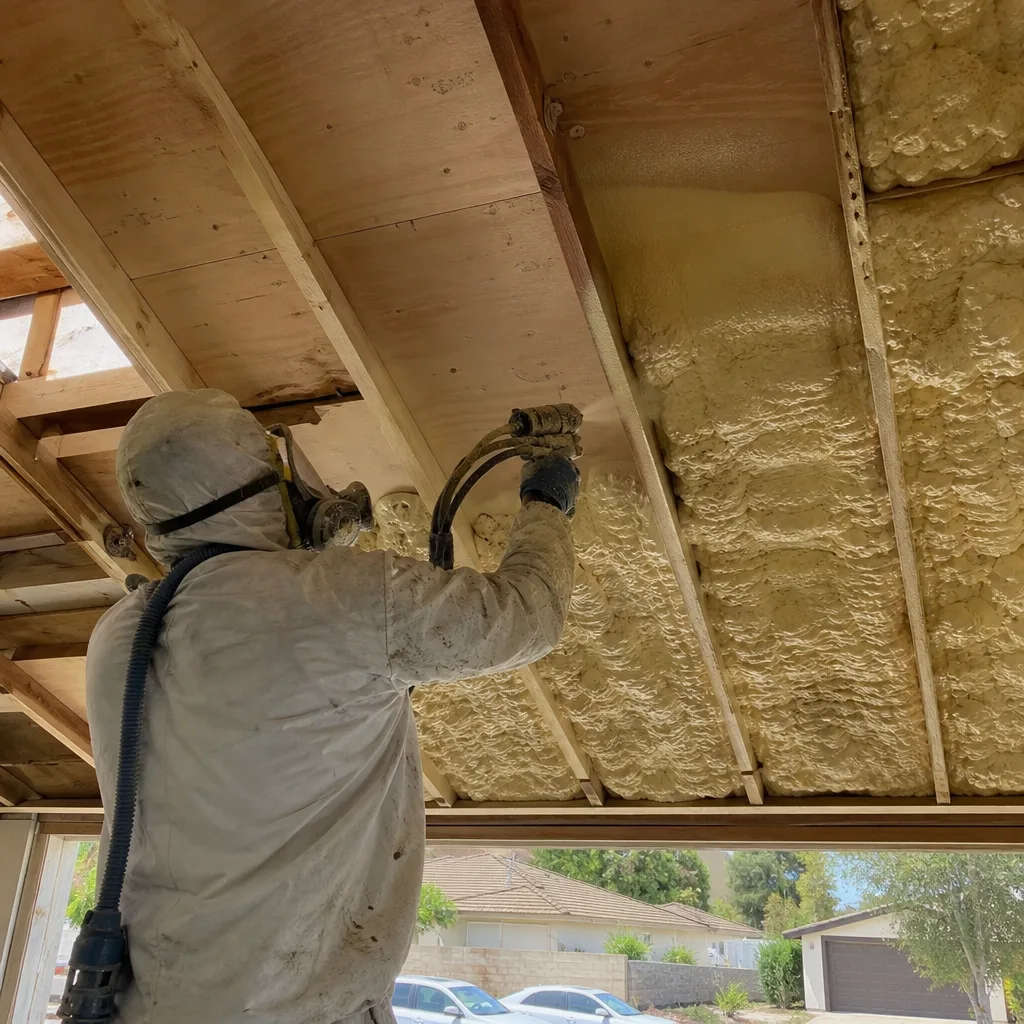
If your home has Icynene spray foam in the roof deck or attic floor, the radiant barrier question comes down to which product line was installed. Icynene’s open-cell products (Classic, Classic Max, and ProSeal LE) and closed-cell lines (ProSeal, MD-C-200, and MD-R-210) all change how a radiant barrier should be installed. Here’s the compatibility gotcha most contractors miss: closed-cell Icynene foam against the roof deck already acts as an air barrier and thermal break, which means a radiant barrier stapled directly over it does almost nothing. The foil needs an air gap of at least 3/4 inch facing an enclosed air space to reflect heat properly. With open-cell Icynene at the attic floor level, a roof-deck radiant barrier is highly effective and directly reduces what your AC has to fight. We inspect the foam type, measure the rafter bays, and match the radiant barrier to what’s actually up there, not what the last contractor guessed. Icynene doesn’t manufacture radiant barrier itself, so “Icynene radiant barrier” means a foil product installed in combination with Icynene foam. We keep Reflectix double-sided foil and a heavier perforated radiant barrier on the truck, and we’ll tell you which one makes sense for your roof pitch and existing insulation.
Signs Your Icynene Radiant Barrier Installation Is Failing
- Upstairs rooms run 8-12 degrees hotter than the rest of the house. Radiant heat from the roof deck is punching through whatever insulation exists. We’ve measured attic surface temperatures over 135°F in Poway and Santee during July, and a failed barrier means that heat transfers into the ceiling drywall all afternoon.
- The AC cycles constantly from 2 p.m. to 7 p.m. Your system isn’t undersized; it’s fighting a heat load the barrier was supposed to block. This is the most common call we get in August from Rancho Bernardo and Scripps Ranch homeowners.
- Foil is visibly sagging, torn, or dangling between rafters. Staples back out of the roof decking as the wood expands and contracts through San Diego’s coastal fog-to-heat swings. Once the foil loses tension, the reflective surface no longer faces the air gap properly.
- You can see dust or insulation covering the shiny surface. Radiant barrier only works when the reflective face stays clean. Blown-in fiberglass or cellulose that drifts against the foil kills its performance. This happens often in homes where a previous outfit added insulation after the barrier was installed.
- Energy bills climbed year over year with no change in household habits. SDG&E rates didn’t do that alone. A degraded radiant barrier in a home with Icynene foam can add $40 – $70 per month to summer cooling costs, and the failure is invisible from the living space.
Replacement Cost & What’s Included
For a standard San Diego attic between 1,200 and 2,000 square feet, Icynene-compatible radiant barrier installation runs $1,100 – $2,800. A smaller condo attic or detached garage might come in under $1,000, and a steep-pitch roof or heavily obstructed attic pushes toward the high end. What drives the range: total square footage, roof pitch, how many rafter bays are blocked by existing Icynene foam or ductwork, whether the old foil needs removal first, and whether we’re stapling to rafters or laying barrier over attic floor insulation. You get a written price before any work starts, not a verbal estimate that changes at the door. The quote lists material, labor, and disposal line by line. Every installation includes our 365-Day Done Right Promise in writing: if it isn’t done right, we make it right. And if the barrier fails within that year, we come back for a free second visit, no charge, no argument.
DIY or Call Us?
Attics in San Diego climb past 120°F during the working hours of a summer day, and a roof deck is no place to spend an afternoon if you’re not dressed and equipped for it. You can safely check the condition of your radiant barrier from the attic access point with a flashlight: look for sagging foil, pulled staples, dust buildup, and any spots where light passes through. That gets you a diagnosis. The actual replacement work means crawling rafter-to-rafter in heat, working around Icynene foam, and stapling foil overhead for hours. Bad ladder placement on a scuttle hole or one slip between rafters puts you through the ceiling drywall. We handle it with a crew, proper attic ventilation set up while we work, and the job done by the time you’d have finished your first bay. If the inspection leaves you unsure what you’re looking at, call (619) 793-3676 and we’ll take a look.
FAQs
A properly installed radiant barrier in a San Diego attic lasts 15-25 years. The failure we see isn’t the foil degrading; it’s staples backing out, dust accumulation, or a poor original install sagging within the first five. If the Icynene foam and barrier were correctly paired with an air gap, the system holds up for the life of the roof. Call (619) 793-3676 if yours failed early and we’ll assess whether the last installer got the compatibility wrong.
Sometimes, yes. If sagging is limited to one or two rafter bays and the foil is still intact, we can re-staple and restore tension in under an hour. But if dust has coated the reflective face or tears run through multiple bays, replacement is usually cheaper than a patchwork repair. We’ll tell you which one applies to your attic after the inspection.
Most Icynene radiant barrier installations in San Diego take 4-6 hours for a standard attic. We show up with a live, trackable arrival time, not a four-hour window, and we send before-and-after photos when the job is done. You’ll see the work without ever going up the ladder.
Yes. We keep perforated radiant barrier and Reflectix on the truck with the stapling and fastening hardware needed for San Diego’s typical roof pitches and rafter spacing. If your job needs a heavier-gauge product than we carry on hand, we can typically have it by the next day and complete the install then.
Good insulation doesn’t announce itself – you just stop noticing your energy bill. If your Icynene radiant barrier isn’t living up to that standard, call Laurel Attic Insulation San Diego at (619) 793-3676 for an honest assessment and a written quote. We’ve been doing this since 2003 as part of the Relay Home Co. family, and every job gets a written price before work starts, live arrival tracking, photo proof, and the 365-Day Done Right Promise in writing.
Written by Chase Whitaker, Owner, Laurel Attic Insulation San Diego at Laurel Attic Insulation San Diego, serving San Diego and nearby areas.