
GreenFiber Insulation Removal in San Diego: What to Know First
GreenFiber insulation removal in San Diego typically runs $1,100 to $3,800 depending on attic square footage, depth of the existing blown-in material, and what we find once we get up there. Most full attic removal jobs take one to two days from start to finish, including cleanup and sanitizing. We’re an independent GreenFiber service provider – not a factory branch, not a franchise – so the price we quote is the price you pay, and every job includes the full written guarantee.
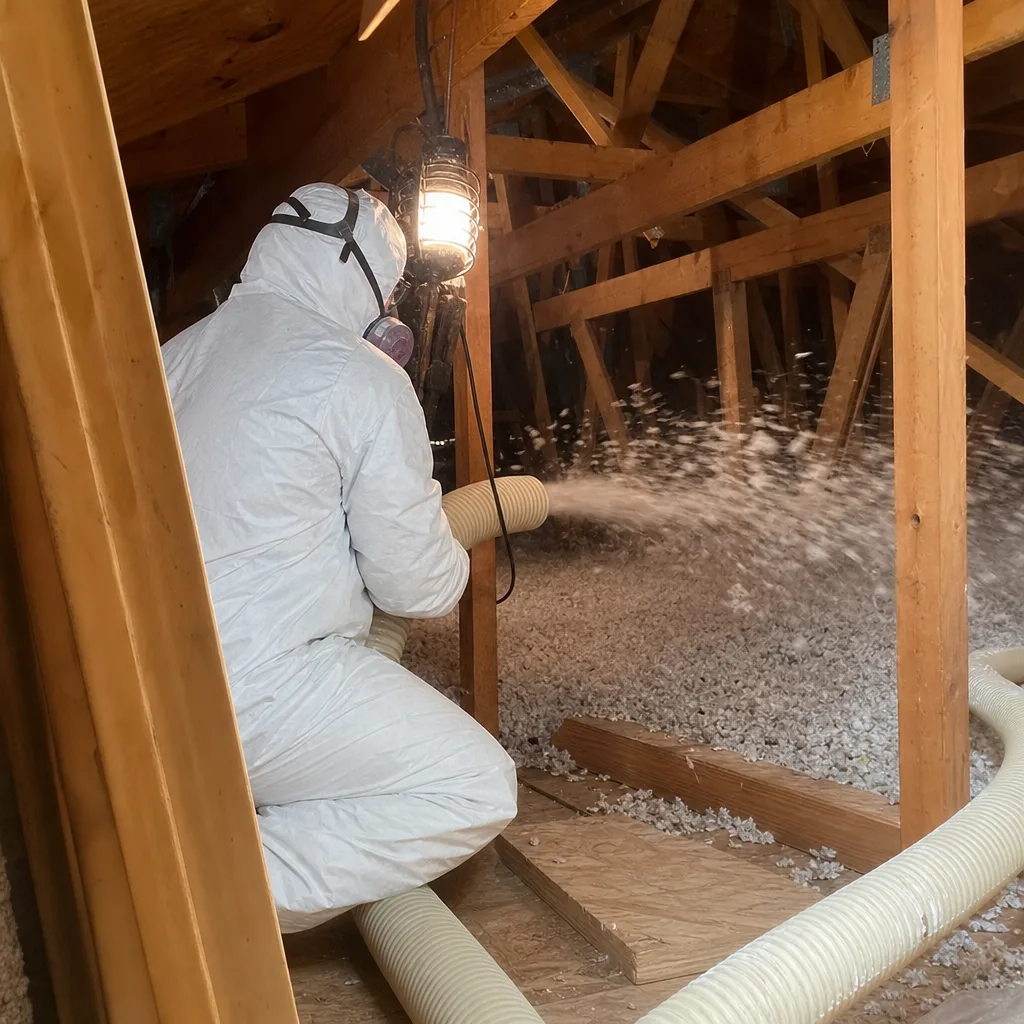
This page is for San Diego homeowners who already have GreenFiber cellulose insulation in their attic or walls and need it pulled out. That usually means one of three things: water damage, rodent or pest contamination, or a ventilation problem that turned the insulation into a damp, compacted mess. If you’re in that situation, call (619) 793-3676 and we’ll walk through what you’re seeing before we ever schedule a visit.
Key Takeaways:
- GreenFiber removal in San Diego averages $1,100 to $3,800; most jobs finish in one to two days.
- We’re independent of GreenFiber, so our recommendations are based on your house, not a brand mandate.
- Wet, pest-damaged, or fire-retardant-compromised cellulose needs removal – adding new insulation on top masks the problem instead of solving it.
- Every removal job includes a written price, live arrival tracking, before-and-after photos, and our 365-Day Done Right Promise.
How GreenFiber Products Fail – and How We Fix Them
GreenFiber makes blown-in cellulose insulation from recycled paper treated with borate for fire resistance and pest deterrence. It’s a solid product when it’s dry and properly installed. But when it fails, it fails in ways San Diego homeowners should know about. Here are the five most common failure modes we see in local attics:
- Water absorption from ceiling leaks or condensation. GreenFiber SANCTUARY and standard GreenFiber cellulose both absorb water fast. Once the material gets soaked, the borate treatment starts washing out, R-value drops sharply (damp cellulose loses a meaningful percentage of its insulating performance), and the material clumps into dense mats that hold moisture against drywall and framing. We remove the wet material, assess the leak source, and only replace the insulation once the decking is dry. This matters because GreenFiber’s own documentation covers product performance, but not the realities of San Diego marine-layer humidity interacting with older roof penetrations.
- Rodent nesting and contamination in the GreenFiber Insulation Plus line. Rats and mice in San Diego attics treat loose-fill cellulose like free bedding. We regularly find tunnels, nests, and droppings throughout GreenFiber insulation in neighborhoods like Clairemont, North Park, and La Mesa. The borate treatment slows insects but doesn’t deter rodents long-term. The fix is full removal, vacuum sanitation, and air sealing the entry points – then installing fresh material. You cannot spot-clean a rodent infestation with cellulose still in place.
- Settling and compaction in the GreenFiber low-dust or standard lines. Cellulose settles more than fiberglass or mineral wool over time. In San Diego homes from the 1970s and 80s, we see attics where the original GreenFiber fill has compacted from 14 inches down to 6 or 7 – well below the code-required R-30 or R-38. At that point, removal and a proper re-blow beats topping off. Removing the old layer lets us check the attic floor for air leaks and install a clean, uniform depth with verifiable R-value.
- Mold growth where bathroom fans vent into the attic. This is a San Diego classic: older homes have bathroom exhaust fans that terminate in the attic instead of outside. Warm, moist air hits the cellulose, and mold takes hold in the top inch. The only correct fix is removal of the contaminated material, cleaning the affected areas, and re-routing the fan to a proper exterior termination. This is specific to cellulose: mold doesn’t feed on fiberglass, but it absolutely feeds on the recycled paper content in GreenFiber.
- Electrical work, re-piping, or renovation debris trapped in the fill. If you’ve had recessed lights changed, wiring updated, or a leak repair done, contractors often leave drywall chunks, old junction boxes, or loose electrical scraps buried in the cellulose. That mess reduces performance and creates fire-risk pockets we don’t want to work around. Removal gives us a clean deck to inspect everything and install fresh material correctly.
Our GreenFiber Insulation Removal Process
Chase Whitaker and our crew have worked San Diego attics from Hillcrest bungalows to newer builds near Miramar, and the process stays consistent regardless of what we find up there.
- 1
Call and describe what’s going on. You reach a live person at (619) 793-3676, any hour. We ask about the attic size, the age of the GreenFiber, and what prompted the call: leak, pests, smell, or a remodel.
- 2
We inspect and give you a written price. A background-checked technician inspects the attic, checks moisture levels, and confirms the depth and condition of the existing insulation. You get the full price in writing before any work begins. No door-step changes.
- 3
Removal with HEPA-filtered vacuum equipment. We use commercial, truck-mounted HEPA vacuums rated for insulation removal. The GreenFiber comes out into sealed bags – no blowing cellulose through your window screens, no dust migrating into the living space.
- 4
Attic assessment once the deck is exposed. This is where we find what the insulation was hiding: cracked vent boots, open chase penetrations, knob-and-tube remnants in pre-1950 homes, and gaps around plumbing stacks. We document everything with photos and flag issues that need a separate trade before new insulation goes in.
- 5
Optionally, we install fresh insulation. We match the replacement to your house and budget. If GreenFiber cellulose was the original choice and you want to stick with it, we can re-blow it. We also offer Owens Corning fiberglass, Rockwool, and other options from our eight-brand lineup – plus Reflectix radiant barriers where they make sense in San Diego’s sun-heavy climate. We recommend what fits, not what’s convenient on the truck.
- 6
You get photo proof and the guarantee in writing. Before-and-after photos of the attic come through digitally, along with your invoice and our 365-Day Done Right Promise. If the work isn’t right within a year, we return and fix it. Free.
What GreenFiber Insulation Removal Costs in San Diego
Removing GreenFiber insulation in a San Diego attic usually lands between $1,100 and $3,800. Here’s what that looks like in practice:
- Small attic (800 – 1,000 sq ft), dry material, standard removal: $1,100 – $1,600
- Medium attic (1,000 – 1,500 sq ft), standard removal: $1,500 – $2,400
- Large attic (1,500+ sq ft) or deep fill (12+ inches): $2,400 – $3,800
- Wet or mold-contaminated material: Add $200 – $600 depending on disposal weight and PPE requirements
- Rodent-contaminated material requiring sanitation: Add $300 – $800 for full vacuuming, sanitizing, and air sealing
What moves the price: attic access difficulty, depth of the existing fill, whether material is wet or contaminated, and whether we’re also re-bombing the attic or subfloor areas. Low-clearance attics or homes in older neighborhoods like South Park and Mission Hills can add time, which shows in the quote. Call (619) 793-3676 for a written, no-pressure estimate – it’s free, and you’ll get the number before you commit to anything.
Why San Diego Homeowners Call Laurel Attic Insulation San Diego for GreenFiber Work
GreenFiber removal isn’t a rare procedure, but doing it right changes the outcome entirely. We’ve been at this since 2003 as part of the Relay Home Co. family, and we built our process around what San Diego homeowners actually want: a real person on the phone, a live arrival time instead of a four-hour window, and photo proof of what happened in your attic. That’s the Relay Visibility Guarantee, and it applies to every GreenFiber removal job we take on. The 365-Day Done Right Promise backs the workmanship in writing, and if the removal or the resulting repair fails within that year, our crew comes back and makes it right at no charge. We also don’t leave you guessing on materials: we carry eight trusted brands including GreenFiber itself and Reflectix for radiant barrier applications. GreenFiber makes good insulation. We make it right when it’s failed.
FAQs
In most cases, yes. If you call by mid-morning and the attic is accessible, we can often have a crew out the same day for an inspection and start removal immediately after you approve the written quote. Call (619) 793-3676 and we’ll tell you straight whether today works.
No. GreenFiber’s product warranty covers material defects, not installation removal. As an independent GreenFiber service provider, we don’t operate under manufacturer authorization, but removing blown-in cellulose doesn’t void product warranties if the material has failed due to moisture, pests, or improper ventilation. That said, if you’re early in a warranty period, we’ll document everything with photos so you have what you need for any claim.
Adding new insulation on top of failed cellulose is always cheaper upfront, and almost always the wrong call. Wet, moldy, or rodent-contaminated insulation keeps doing damage underneath the fresh layer, and you’ll pay more later to remove twice the material. We’ll tell you if topping off is viable, but if the bottom layer is compromised, removal is the only fix that actually fixes anything. Call (619) 793-3676 for a straight answer on your specific attic.
One to two days for most homes. A standard 1,200-square-foot attic with dry material takes a full day including setup, vacuuming, bagging, and cleanup. Wet or contaminated material can extend to a second day. We’ll give you the timeline with your written estimate, and we won’t leave you waiting on a vague window – the crew’s arrival is trackable live from your phone.
It depends on your attic and your goals. We re-install GreenFiber cellulose when it’s the right fit, but we also carry Owens Corning fiberglass, Rockwool mineral wool, and spray foam options like Icynene and Demilec. For San Diego’s climate, we often recommend Rockwool or blown-in fiberglass for attics over conditioned space. Chase and the crew will show you the R-value numbers and dollar trade-offs before you choose.
If your GreenFiber insulation has failed – wet from a leak, full of rodent droppings, or just compacted to the point it’s not doing its job – call Laurel Attic Insulation San Diego at (619) 793-3676. You’ll reach a person, get a written price, and know exactly when we’ll be there.
Written by Chase Whitaker, Owner, Laurel Attic Insulation San Diego at Laurel Attic Insulation San Diego, serving San Diego and nearby areas.