
Demilec Crawl Space Encapsulation: The San Diego Owner’s Guide
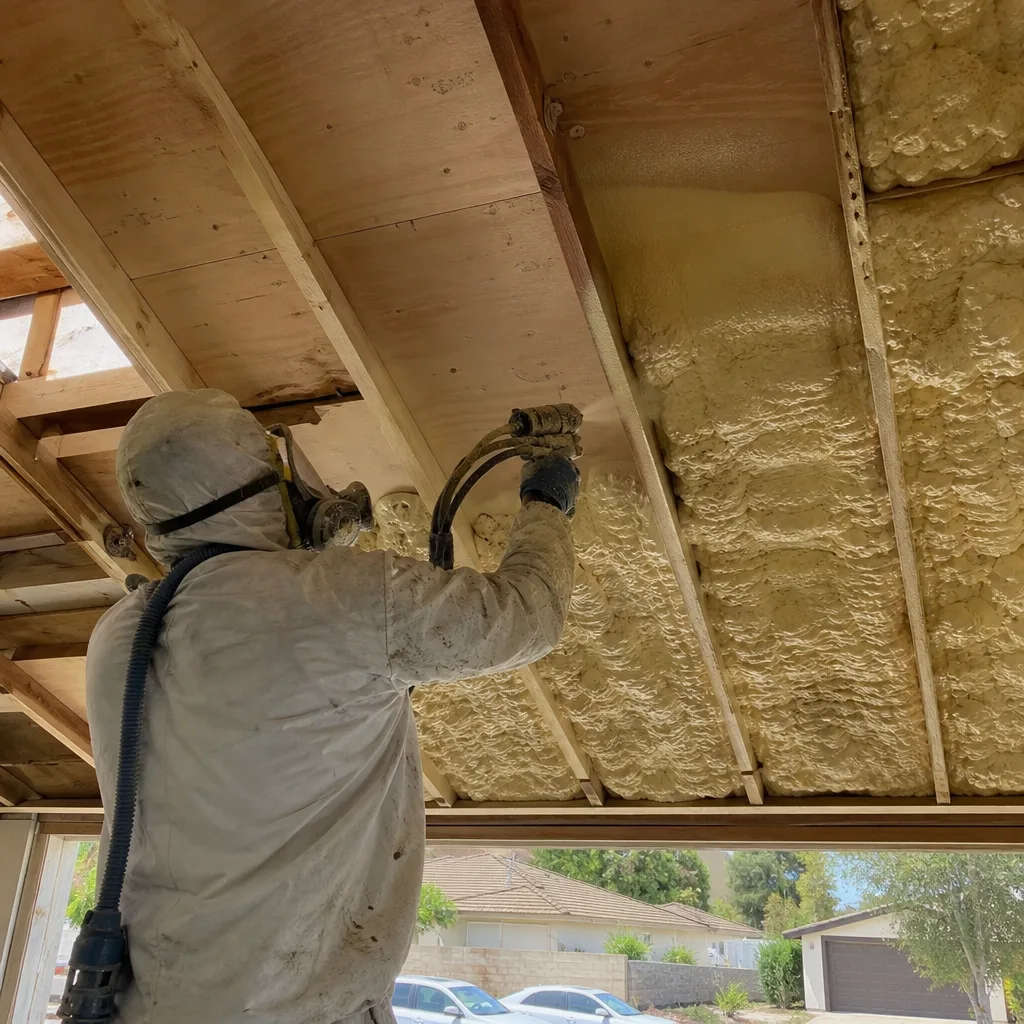
We stock and install Demilec-compatible crawl space encapsulation materials across San Diego, with most full encapsulation jobs running $6,500 to $14,000 depending on square footage, access, and moisture severity. We keep Demilec’s Heatlok HFO and Sealection 500 on hand, so same-week scheduling is realistic for most homes in the county. You’ll usually discover your encapsulation has failed because of the smell first: that musty, earthy odor drifting up through the floorboards, followed by warped hardwood or condensation on your subfloor insulation. That’s the vapor barrier or foam layer telling you moisture found a way through.
Key Takeaways:
- Demilec closed-cell foam (Heatlok HFO) and open-cell foam (Sealection 500) fail differently in San Diego’s coastal climate than they do inland.
- Most “encapsulation failures” aren’t the foam itself. They’re seam separations, punctures, or improper installation around piers and plumbing penetrations.
- We give a written price before work starts, and the 365-Day Done Right Promise covers the install for a full year.
Which Demilec Models This Applies To
Demilec’s crawl space line breaks into two product families: Heatlok HFO, a closed-cell spray foam that acts as both insulation and vapor barrier, and Sealection 500, a lighter open-cell foam typically paired with a separate 12-mil polyethylene liner. Both are common in San Diego homes built or retrofitted in the last decade, and both have specific compatibility quirks. Heatlok HFO requires a minimum 2-inch lift to hit code-level vapor permeance in a vented crawl space. Sealection 500, because it’s open-cell, must always be paired with a liner, never used alone as the moisture barrier.
If you’re trying to identify what you have, check the rim joist area. Heatlok HFO cures to a dense, slick surface with a slight off-yellow tint. Sealection 500 looks fluffier, almost like a sponge. The label on the drum, if you can still read it, will say either “HFO” or “500” near the top. As for OEM versus aftermarket: Demilec doesn’t license third-party repair kits, so any patching product claiming to be “aftermarket Demilec” is simply a generic foam. For small punctures in Heatlok HFO, a single-component foam like Great Stuff Pro will hold temporarily, but it won’t match the R-value or the air-seal properties. For anything bigger than a fist-sized hole, you want a reflash with genuine Demilec product. That’s what we carry on the truck.
Signs Your Demilec Crawl Space Encapsulation Is Failing
- Musty smell that gets worse after rain. This tells you moisture is getting past the vapor barrier. In San Diego it’s especially common after winter’s first heavy storm, when the clay-heavy soil under Clairemont and Mission Valley homes saturates and pushes vapor upward.
- Condensation on subfloor insulation or exposed ductwork. That means the encapsulation’s air seal has a breach somewhere, and humid crawl space air is hitting cooler surfaces. You’ll see it first on the underside of the fiberglass batts.
- Peeling or bubbling paint on baseboards near the floor. Moisture migrating up through wall cavities shows the encapsulation isn’t containing the vapor below deck. This shows up more in older homes where sill plates are directly on foundation.
- Foam pulling away from the foundation wall or piers. This is a mechanical failure: usually from soil movement, seismic activity, or improper surface prep before the original spray. Once foam separates, water gets behind it and the failure compounds.
- You see daylight in your crawl space. If foundation vents were left open after encapsulation, the whole system is compromised. Demilec’s closed-cell products are designed for a sealed environment. Open vents defeat the purpose and reduce foam lifespan.
Replacement Cost & What’s Included
Here’s what Demilec crawl space encapsulation replacement looks like on price, based on the work we’ve done across San Diego:
| Scope | Typical Range in San Diego |
|---|---|
| Small patch repair (Heatlok HFO, under 10 sq ft) | $450 – $900 |
| Partial reflash (one wall or rim joist section) | $1,200 – $2,800 |
| Full encapsulation, 800 – 1,200 sq ft crawl space | $6,500 – $9,500 |
| Full encapsulation, 1,200 – 2,000 sq ft with liner replacement | $9,500 – $14,000 |
These numbers include the foam or liner, surface prep, disposal of failed material, and cleanup. What moves the price: crawl space height (anything under 30 inches takes longer and costs more), access (interior hatch vs exterior door), the condition of existing drainage, and whether we’re pulling out failed fiberglass or old plastic sheeting first. You get a written line-item quote before we spray anything. If the repair fails within 365 days, we come back and make it right under the Done Right Promise. If the same repair fails again, the second visit is free.
DIY or Call Us?
Here’s the honest split. You can safely do a visual inspection: look for standing water, check the rim joist for foam separation, take photos of any punctures, and measure your vapor barrier’s coverage. What you should not DIY: crawling in there with a single-component foam can to “touch up” Demilec Heatlok HFO and expecting it to perform. That patch doesn’t have the same closed-cell structure, it won’t bond reliably to the existing cured foam, and you’ll likely miss the real problem, which is usually a drainage or ventilation issue, not just insulation. Same goes for respraying open-cell Sealection 500. The chemistry and the spray rig matter. This is one of those cases where a trained eye saves you money. Call us at (619) 793-3676 and Chase or someone from the crew will walk the space with you, free estimate included.
FAQs
Properly installed Demilec Heatlok HFO closed-cell foam lasts 30+ years in a sealed San Diego crawl space; Sealection 500 with a liner typically lasts 20 – 25 years before the liner needs replacing. In coastal neighborhoods like Point Loma or Pacific Beach, expect the liner to degrade faster due to constant humidity and salt air. Call (619) 793-3676 and we’ll assess what’s actually wearing down in your crawl space.
Yes, most failures are repairable if the foam hasn’t delaminated from more than 20% of the surface area, and patches cost between $450 and $900 for small breaches. We’ll tell you straight if the damage is too widespread to patch economically. Call (619) 793-3676 for an honest read on what’s feasible.
For a standard San Diego crawl space under 1,200 square feet, plan on one to two days from setup to cleanup. Larger homes or those requiring liner replacement alongside foam work may take three days. We give you a written timeline before the job starts, so you’re never guessing.
We keep Demilec Heatlok HFO and Sealection 500 in stock at our San Diego warehouse; we also carry Reflectix radiant barrier products for related under-floor applications. That means we can typically schedule your repair within the same week rather than waiting on a distributor. We’re an independent installer, not a Demilec affiliate.
Written by Chase Whitaker, Owner, Laurel Attic Insulation San Diego at Laurel Attic Insulation San Diego, serving San Diego and nearby areas.