
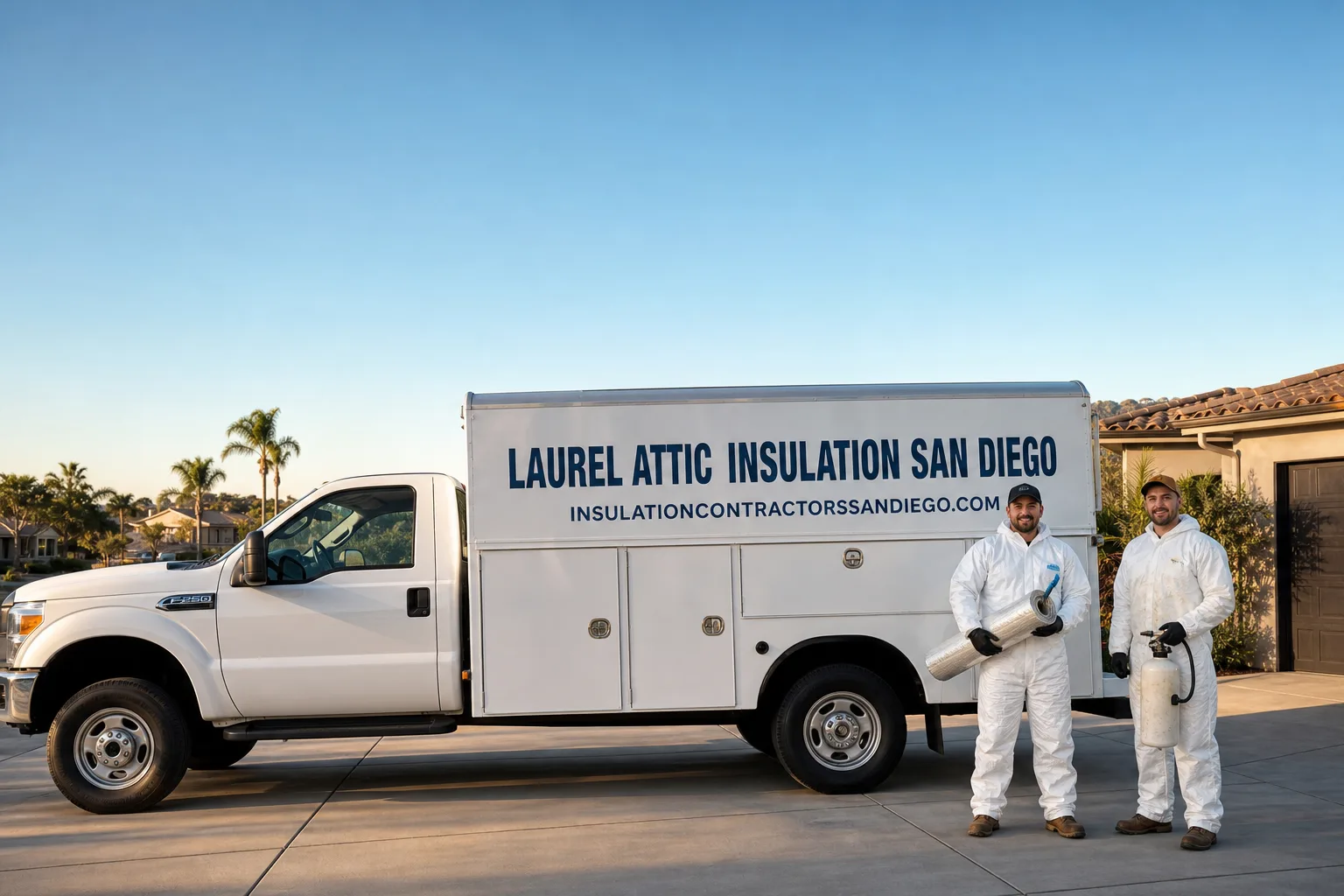
Fast, Reliable Attic Insulation Across Alpine
If your Alpine home’s attic is under-insulated, you’re paying for it every month. Most older Alpine houses we inspect are running on settled R-11 fiberglass batts that lost half their R-value years ago. We fix that. Laurel Attic Insulation San Diego serves Alpine with same-week scheduling, a written price before any work starts, and crews who know the difference between a standard tract home and a 1970s ranch on acreage off Arnold Way. Call (619) 793-3676 for a free estimate.
Key Takeaways:
- Blown-in attic insulation in Alpine typically costs $1,200 – $2,800 depending on square footage and target R-value.
- Attic ventilation upgrades run $400 – $1,400, and radiant barrier adds $800 – $1,800 for most Alpine homes.
- We answer the phone live, 24/7. No voicemail tag.
- Every job includes a 365-day Done Right Promise in writing, and a free second visit if something’s not right.
Why Laurel Attic Insulation San Diego Is Alpine’s Preferred Attic Insulation Company
Alpine isn’t a one-size-fits-all market. The homes up here are different from what you’d find in La Mesa or Santee. Bigger lots. Older custom builds. More converted garages and unpermitted additions. Our Attic Insulation team has spent enough time crawling through Alpine attics to know exactly what to expect: legacy R-11 batts, rodent nesting, missing eave vents, and rooflines that make retrofits a puzzle. That’s why local homeowners call us instead of a generic contractor.
We’re part of the Relay Home Co. family, founded in 2003. Led by Chase Whitaker, our crews arrive at a live, trackable time, not a four-hour window. You get a written price before work starts. You get photo proof when the job is done. And you get a 365-day Done Right Promise: if it’s not right, we make it right, in writing, on every job. Chase built this operation around visibility because Alpine homeowners told us flat-out what they hate about contractors: price changes at the door, no-shows, and phones that ring into the void. We don’t do any of that.
One thing that sets us apart in Alpine: we stock materials from eight leading manufacturers, including Owens Corning, Icynene, and Demilec. That means when we diagnose a problem in your attic on Tuesday, we’re not waiting until Friday for a truck to show up with the right product. We show up with it.
Attic Ventilation in Alpine
Attic Ventilation in Alpine isn’t a nice-to-have. It’s the difference between an attic that stays under 115°F in August and one that bakes past 150°F. Alpine’s high-desert climate produces wide diurnal temperature swings: hot, dry days followed by cool nights. Without balanced intake and exhaust ventilation, that trapped daytime heat radiates down into your living space, makes your AC work harder, and cooks your insulation until it loses effectiveness. A typical attic ventilation upgrade in Alpine runs $400 – $1,400 depending on roof configuration and how many eave and ridge vents we need to add.
Balanced Intake and Exhaust
The goal is simple: cool air in through the eaves, hot air out through ridge or roof vents. In Alpine’s older homes, we often find either no eave vents at all or vents that are far too small for the attic volume. We calculate the right intake-to-exhaust ratio for your specific roof, then install vents that match your home’s architecture.
Signs Your Alpine Home Needs Ventilation Work
If your upstairs rooms are 10 degrees hotter than downstairs in summer, or if you notice peeling paint on the gable ends, your attic isn’t breathing. Same goes for ice dams on the rare Alpine freeze night. We’ll inspect your existing vents and give you a written recommendation with real numbers, not vague warnings.
Radiant Barrier in Alpine
A Radiant Barrier in Alpine works by reflecting radiant heat away from your attic floor before it penetrates your insulation. Given Alpine’s high-desert sun exposure and the number of low-slope and flat roofs in the area, radiant barrier is one of the most effective upgrades we install. Most Alpine homes see a 10 – 20°F reduction in attic temperature after installation. Radiant barrier for a typical Alpine home runs $800 – $1,800, and we often pair it with blown-in insulation to hit target R-values without overloading the attic structure.
How Radiant Barrier Performs in Alpine’s Climate
Radiant barrier works best in hot, sunny climates, which describes Alpine’s summer perfectly. The foil surface reflects up to 97% of radiant heat transfer. When we install it on the underside of your roof deck, the attic floor stays cooler, your insulation does its job better, and your living spaces recover faster at night when Alpine temperatures drop.
Radiant Barrier vs. More Insulation
Some Alpine homeowners ask whether they should add more insulation or install radiant barrier. The answer depends on what’s already in your attic. If you’re sitting on degraded R-11 batts, insulation replacement comes first. If you already have R-38 or better but the upstairs still swelters, radiant barrier is usually the missing piece. We’ll tell you which one makes sense, because we don’t sell you materials you don’t need.
Trusted Brands We Service in Alpine
We work with materials from Icynene, Demilec, GreenFiber, and Owens Corning, plus four other leading manufacturers. For Alpine’s mix of older custom homes and ranch-style builds, we match the product to the job rather than grabbing whatever’s already on the truck. We keep a local stock of the most common Alpine products, so if you’re mid-project and need a top-up or a replacement batt, we can usually get it done within a few days. No two-week waits for a truck from somewhere else.
Common Attic Insulation Problems We See in Alpine Homes
- Rodent-Compromised Legacy Batts: Alpine’s rural and semi-rural lots mean critters get into attics more often than most homeowners realize. Squirrels and rats tear apart the original R-11 batts, using the paper backing for nests. The insulation loses its R-value fast, and we find rodent droppings throughout the material, which means full removal and replacement, not a top-up.
- Missing or Undersized Eave Vents: Many 1960s-1980s Alpine homes were built with minimal eave ventilation or none at all. Attic temperatures climb past 150°F in July, the insulation degrades, and the upstairs never cools down. The fix is installing proper intake vents and balanced exhaust.
- Unpermitted Converted Garages and Additions: Alpine has a surprising number of detached workshops and garage conversions that were never permitted. These spaces usually lack insulation and vapor barriers entirely. In a high-desert climate with freezing winter nights, that means moisture accumulation, mold risk, and heat loss you feel in the adjacent rooms.
- Settled Insulation from the 1970s: The original R-11 batts installed in older Alpine ranch homes weren’t meant to last 50 years. We regularly find them compressed, dusty, and holding maybe R-5 worth of actual performance. A full removal and new blown-in insulation to R-38 or R-49 changes how the whole house feels.
Pricing for Attic Insulation in Alpine, CA
Here’s what you can expect to spend in Alpine. Blown-in attic insulation typically runs $1,200 – $2,800 depending on square footage and target R-value. Attic batt insulation for a standard home is usually $1,000 – $2,200. An insulation top-up runs $500 – $1,200, and a full attic insulation replacement including removal of old material is $1,800 – $3,800. Attic baffles and ventilation prep add $300 – $900. Your exact price depends on attic size, access difficulty, and what condition your current insulation is in. We give you a written estimate before anything starts, so there’s no door-step surprise. Call (619) 793-3676 and we’ll walk you through it.
We Also Serve Cities Near Alpine
Our crews work throughout the East County. If you live in Alpine or just down the hill in Lakeside, Santee, Spring Valley, or La Mesa, we can usually get to you within a day or two. The same written pricing, the same live tracking, and the same 365-day promise apply everywhere we work.
Serving Alpine, CA - Our Local Coverage Area
We’re based in the Alpine area and know this community well. Use the map below to see our service coverage - if you’re nearby, we can almost certainly help.
FAQs About Attic Insulation in Alpine
Alpine’s high-desert climate creates much wider temperature swings than you’d see in coastal San Diego. Summer days climb into the 90s while winter nights can dip below freezing. That means your attic insulation needs to handle both heat resistance and moisture control, which is a bigger ask than insulating a coastal home where the temperature barely moves. In practice, Alpine homes need higher R-values and better ventilation than comparable homes closer to the coast. We target R-38 to R-49 for most Alpine attics, whereas coastal homes can often get away with less. If your current insulation was installed decades ago for a different climate, it’s working against you now. Call (619) 793-3676 and we’ll tell you what your attic actually needs.
Yes, and in most cases it’s one of the best investments you can make in an older Alpine home. The R-11 batts installed in the 1970s have settled, been chewed on by rodents, and lost much of their original performance. We measure them all the time and they rarely test above R-5. Upgrading to blown-in fiberglass or a high-performance batt at R-38 or higher typically cuts attic-driven heat transfer dramatically, and homeowners notice the difference in their upstairs comfort within a week, especially during Alpine’s hot summers. We also air-seal the attic floor while we’re up there, which closes the gaps where hot attic air leaks into the house. The return on this upgrade is measured in years, not decades.
We can, and we do it regularly in Alpine. Unpermitted garage conversions and detached workshops are common on the acreage lots here, and most of them were built without insulation or vapor barriers. In Alpine’s climate, that means the space is baking in summer and freezing on winter nights, and moisture can collect in the walls and ceiling. We’ll insulate the space properly, install a vapor barrier where it’s needed, and match the work to the existing structure. We don’t care about the permit history of your conversion. We care that you have a comfortable, usable space. And we’ll give you a written price before we touch anything.
For Alpine homes with flat or low-slope roofs, we usually recommend blown-in fiberglass at R-38 or higher. Low-slope roofs leave less attic ventilation area, so the insulation itself has to do more of the work. Blown-in fiberglass fills irregular cavities better than batts, and it’s easier to install properly in the tight clearances those roofs create. We pair it with the right ventilation solution, usually a combination of eave vents and a low-profile roof vent or mechanical ventilation. If you’re not sure what your roof can handle, we’ll take a look and give you a straight answer with real numbers.
Because Alpine’s high-desert sun beats directly on the roof deck, and most older homes here don’t have enough eave vents to let the heat escape. The attic becomes a heat trap. At 150°F, the air in your attic is actively degrading your insulation and pushing heat through the ceiling into your living spaces. Fiberglass batts lose their loft and their R-value. The ceiling drywall becomes a radiator. Your AC runs constantly. The fix is adding balanced ventilation and, in many cases, a radiant barrier to reflect heat before it enters the attic in the first place. We recently worked on a 1970s ranch-style home off Arnold Way in Alpine where the attic had only settled R-11 fiberglass batts and no proper eave vents. Our team removed the rodent-damaged material, air-sealed the attic floor, and installed Owens Corning blown-in fiberglass to R-38, then added balanced intake and exhaust ventilation, bringing peak attic temperatures down from over 150°F to under 115°F and cutting the homeowner’s cooling bill noticeably. That’s the kind of result we can document for your home too.
We schedule most Alpine jobs within the same week you call. Our dispatch runs out of the San Diego office, and our crews serve Alpine locally, so we’re already in the area regularly. For smaller jobs like a top-up or a ventilation inspection, we can often fit you in within a day or two. For full insulation removal and replacement we’ll typically schedule within a week. When you call, you’ll talk to a live person who can give you real availability, not a call center script.
Yes. We work everywhere in Alpine, from the older sections off Alpine Boulevard to the more rural hillside properties off Tavern Road, South Grade Road, and the acreage lots around Victoria Drive. The rural properties often have the biggest insulation challenges because they’re more exposed to the elements and more likely to have unpermitted additions, detached workshops, and critter problems. We’re comfortable with all of it. If you’re not sure whether we cover your area, call (619) 793-3676 and ask.
Yes, and it’s in writing on every job. The 365-Day Done Right Promise covers workmanship for a full year. If something’s not done right, we come back and make it right, free of charge. You also get a free second visit if a repair fails, no charge, no argument. Every job includes a written guarantee delivered with the digital invoice you can pay from a link. That’s the Relay Visibility Guarantee, and it applies to every Alpine home we work on.
Written by Chase Whitaker, Owner at Laurel Attic Insulation San Diego, serving Alpine since the company’s founding in 2003.