
GreenFiber Radiant Barrier Installation: The San Diego Owner’s Guide
We install GreenFiber-compatible radiant barrier in San Diego attics for $1,150 – $2,800 depending on square footage, rafter configuration, and whether we’re stapling to rafters or laying over existing insulation on the attic floor. We stock the materials on our trucks, so most jobs are done same-day or next-day, and every quote is written before we touch the attic. Most San Diego homeowners discover their radiant barrier has failed by walking up on a July afternoon and realizing the attic feels like a pizza oven when it used to stay noticeably cooler after the original install.
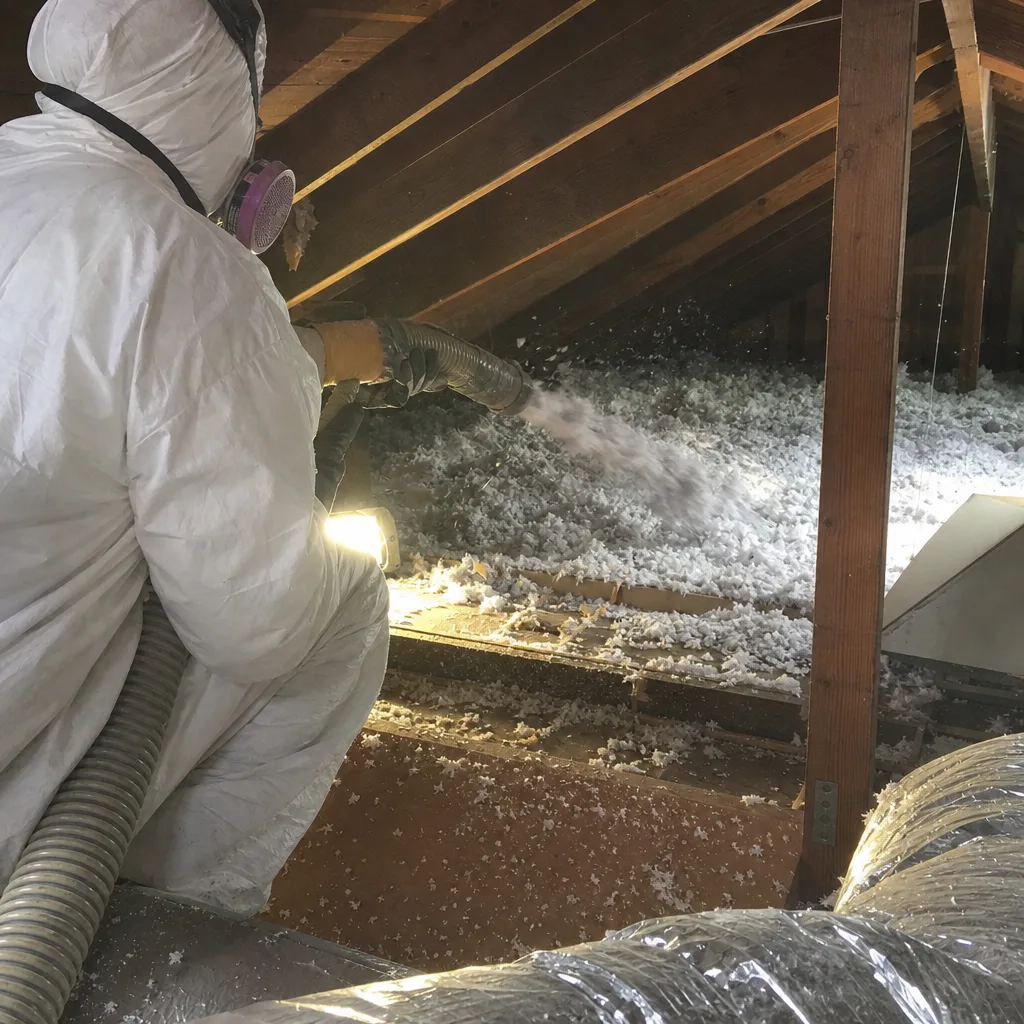
Here’s the thing about radiant barrier in San Diego specifically: our sun doesn’t mess around. A properly installed radiant barrier can drop attic temps by 20 – 30 degrees, which takes real load off your AC. But a torn, sagging, or poorly stapled barrier does almost nothing. The material only works when it’s intact, has the right air gap on the reflective side, and isn’t buried under dust or blown-in insulation. If any of those three conditions fail, you’re paying for square footage that isn’t performing.
Which GreenFiber Models This Applies To
GreenFiber doesn’t sell radiant barrier as a standalone retail product the way they sell cellulose insulation. What you likely have is either a GreenFiber-specified attic package that included a foil radiant barrier component, or a radiant barrier installed alongside GreenFiber blown-in cellulose. Here’s the compatibility detail that matters: GreenFiber’s attic systems are designed around perforated single-sided foil radiant barrier, typically 48 – 60 inches wide, with a woven scrim reinforcement layer. The perforations matter because they prevent moisture trapping between the foil and the roof deck – a real concern in coastal San Diego neighborhoods like Point Loma or Ocean Beach where marine layer humidity runs high from May through August.
If you’re replacing a damaged section, match these specs: single-sided foil (not double), perforated (not solid), and reinforced (not plain foil). Plain supermarket-grade foil tears during installation and sags within two summers of San Diego heat cycling. We also stock Reflectix – the double-bubble product – for specific applications like duct wrapping or garage walls, but for attic rafter installation, the woven perforated product is the right tool. Laurel Attic Insulation San Diego is an independent installer and isn’t affiliated with GreenFiber, but we work with their specified materials daily and know what matches what.
Signs Your GreenFiber Radiant Barrier Installation Is Failing
- Attic suddenly hotter in summer. If July feels worse than last year with the same AC settings, the barrier has likely torn, sagged, or detached from the rafters. Radiant barrier performance drops sharply once the reflective surface loses its smooth, gap-backed position.
- Visible tears or staple pullout at rafter seams. San Diego’s dry heat plus temperature swings cause wood to expand and contract. Staples pop, seams separate, and gravity does the rest. You’ll see hanging foil sections when you peek up from the attic access.
- Foil dust or glitter-like particles on stored items. This means the foil layer is delaminating from the scrim backing. Once delamination starts, the reflective surface effectiveness drops off quickly, and the material is past saving.
- Higher summer electric bills with no other explanation. A failed radiant barrier means your attic heats up more, which means your ceiling insulation absorbs more heat, which means your AC runs longer. San Diego Gas & Electric rates make this an expensive symptom to ignore.
- Moisture staining or condensation on the underside of the barrier. This usually means a solid (non-perforated) foil was installed originally, or the barrier was installed with insulation pressed tightly against it, eliminating the required air gap. Both are installation failures we see regularly when correcting older San Diego attic work.
Replacement Cost & What’s Included
Full radiant barrier installation in a typical San Diego single-story home attic (1,200 – 1,800 sq ft) runs $1,150 – $2,800 installed. Here’s what drives the range:
- Attic size and roof complexity – a simple gable roof is fastest; a hip roof with valleys and transitions takes more cutting and stapling labor.
- Installation method – stapling to the underside of rafters costs more than laying the barrier over existing attic-floor insulation, but rafter installation is the method that actually blocks radiant heat before it enters the attic space.
- Old barrier removal – if the failed material needs pulling down and disposal, add $200 – $500 depending on attic size and access.
Every job includes the written price before work starts, labor, all material, disposal of old barrier if applicable, and the 365-Day Done Right Promise: if it’s not right, we make it right, backed in writing. If a repair fails within the year, the second visit is free – no charge, no argument. We don’t do vague verbal estimates. You get a number, on paper, before a single staple goes in.
DIY or Call Us?
You can safely do three things yourself: inspect the attic with a flashlight to confirm the barrier is the problem, check whether the existing barrier is perforated or solid foil by holding a section up to the light, and measure your attic’s rough square footage so you can compare quotes accurately. That’s the diagnostic part, and it’s genuinely useful.
What you shouldn’t do is attempt a full re-staple while balancing on ceiling joists in a 140-degree San Diego attic in August. Falls through drywall, staples through wiring, and heat exhaustion are all real outcomes we’d rather you avoid. Radiant barrier itself isn’t high-tension or electrical, but working over your head in an unconditioned attic on a summer afternoon is a genuine hazard. If you’re not comfortable up there, or the damage is beyond one section, call us at (619) 793-3676 and we’ll get a crew out – tracked arrival time, written quote, done right.
Key Takeaways
- GreenFiber-compatible radiant barrier in San Diego: $1,150 – $2,800 installed, written price before work starts.
- Match the specs: perforated, single-sided, reinforced foil – not plain foil, not solid.
- Perforation matters for San Diego coastal humidity. Solid foil traps moisture.
- Failed barrier = higher summer electric bills. The repair pays for itself over a couple of San Diego summers.
- We stock the material on the truck. Same-day or next-day installs are the norm, not the exception.
FAQs
A properly installed perforated radiant barrier in San Diego lasts 15 – 25 years. The limiting factors in our climate are staple corrosion near the coast, thermal cycling stress on the foil layer, and dust accumulation on horizontal surfaces. Rafter-mounted barrier lasts longer than floor-laid barrier because the vertical orientation sheds dust more effectively. Call (619) 793-3676 if your barrier is under 15 years old and showing failure signs – that usually points to the original installation, not the material.
Yes, if the damage is limited to one or two sections and the surrounding material is still intact and properly stapled. We patch by overlapping the new foil 6 inches over the old and re-stapling at the rafter line. What we won’t do is spend your money patching a barrier with widespread delamination, torn seams in multiple bays, or foil that has degraded past useful reflectivity. At that point, replacement is the honest recommendation. We’ll tell you which one you need when we look at it – free estimate, written down.
Most San Diego attic radiant barrier installations take 4 – 8 hours for a standard single-story home, which means we’re usually done the same day. Multi-level homes, complex roof geometry, or old-barrier removal can push that into a two-day job. You’ll get a live arrival time, photos of the work as it progresses, and a written guarantee with your digital invoice.
We do. Our install vehicles carry perforated reinforced foil barrier in multiple roll widths, plus the staples, tape, and accessories needed for rafter or floor installation. If your job requires something we don’t have on the truck, we’ll tell you before quoting – not after we’ve started. That’s the whole point of the Relay Visibility Guarantee: written price, tracked arrival, photo proof, no surprises.
Written by Chase Whitaker, Owner, Laurel Attic Insulation San Diego at Laurel Attic Insulation San Diego, serving San Diego and nearby areas.