
Demilec Attic Insulation: The San Diego Owner’s Guide
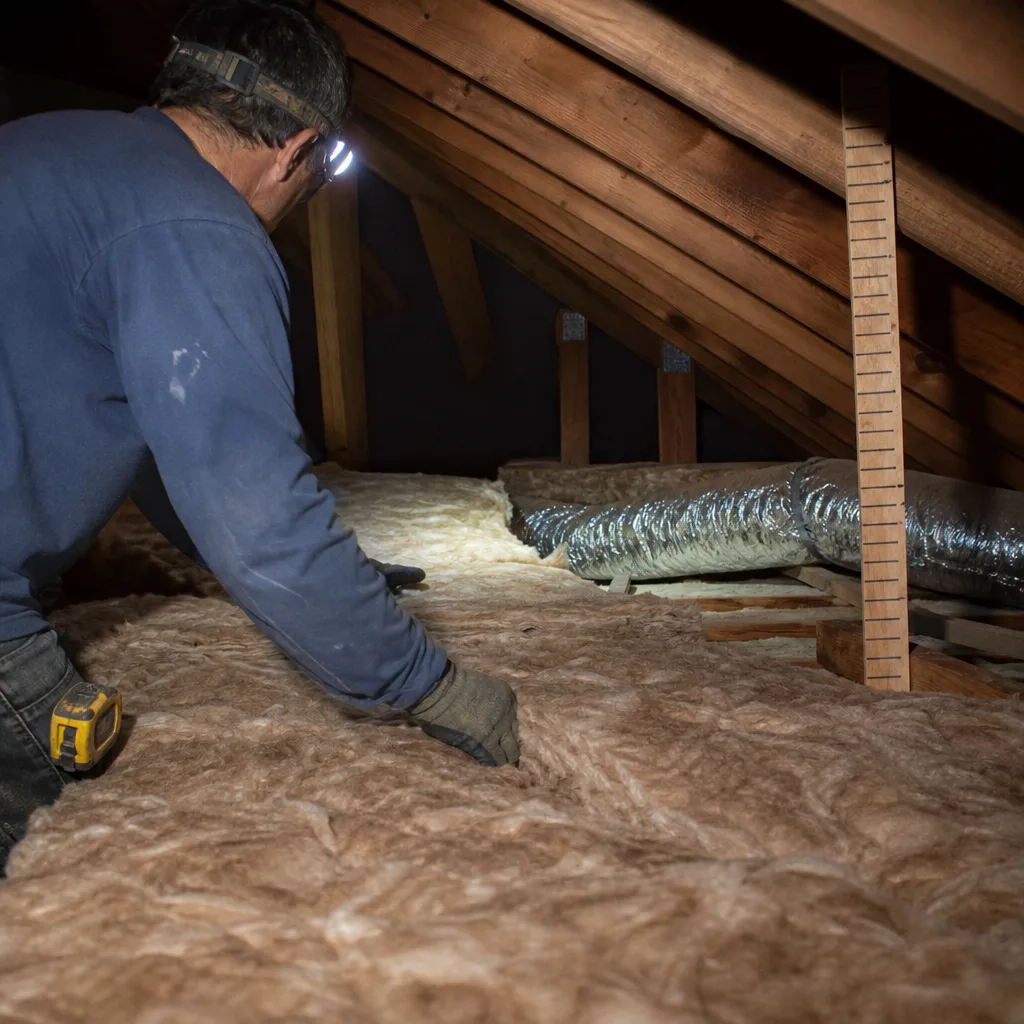
We stock and install Demilec-compatible spray foam attic insulation throughout San Diego, with most jobs running $1,800 to $4,600 installed depending on square footage and whether we’re working with open-cell or closed-cell foam. Same-day and next-day appointments are available in most San Diego neighborhoods. You probably landed here because your Demilec foam has started pulling away from the roofline, or you’ve noticed a scratchy chemical smell that won’t fade, or your attic is suddenly ten degrees hotter than it was last summer. That’s the failure pattern we see most often, and it’s worth addressing before your cooling bill does it for you.
Key takeaways:
- Demilec spray foam failures in San Diego are usually moisture, UV exposure, or installation-related, not a defect in the foam chemistry itself.
- Compatible replacement materials are in stock at our San Diego warehouse and on most trucks.
- We’re an independent installer, not a Demilec affiliate. We match the foam to the job, not the other way around.
Which Demilec Models This Applies To
Demilec’s attic-relevant lineup breaks into two broad families: the Heatlok series (closed-cell, higher R-value per inch) and the Sealection series (open-cell, more forgiving on older framing). The most common attic installations we see in San Diego homes are Heatlok HFO High Lift, Heatlok Soya, and Sealection 500. Each has different expansion rates, density specs, and moisture-vapor characteristics, which means a “one foam fits all” approach leads to exactly the kind of failures that bring homeowners to this page.
The compatibility gotcha most people miss: the foam that was right for a 1990s Hillcrest bungalow with skip sheathing is not automatically the right foam for a 2015 tract home near Otay Ranch with a sealed attic assembly. Older San Diego homes often need open-cell for breathability; newer tight envelopes want closed-cell for air-sealing performance. If the original installer used the wrong formulation for the assembly, the foam will fail early, usually within five to seven years. When we assess a job, we check the label data on the existing foam, measure the installed depth, and match replacement material to the actual roof assembly, not to whatever the original crew happened to have in the truck. On the OEM versus aftermarket question: Demilec products are the standard we reach for on demilec-to-demilec matches, but we also stock quality alternatives from other manufacturers on our truck, because sometimes a different foam chemistry is simply the better engineering call for a given roof.
Signs Your Demilec Attic Insulation Is Failing
- The foam is shrinking or pulling back from the framing. This is the classic open-cell failure in San Diego’s dry, hot summers. When foam loses dimensional stability, it leaves gaps at the eaves and ridge where air moves through, and your R-value drops with every gap. We see this most often on roofs that get direct afternoon sun in places like Clairemont or La Mesa.
- A sharp, mustardy or fishy odor that gets worse when the attic heats up. Some Demilec batches, particularly older Sealection formulations, can off-gas amines when installed too thick or without proper temperature control. The smell comes and goes with heat, which is why homeowners notice it in July and forget it by January.
- Condensation on the roof sheathing or damp spots on the attic floor. Closed-cell foam should be impermeable. If moisture is getting through or around it, you’ve got an installation void, a coverage gap, or the wrong foam for the assembly. In San Diego’s marine layer zones like Point Loma or Ocean Beach, this problem accelerates fast.
- Your attic is noticeably warmer than it used to be. R-value loss doesn’t announce itself with a bang. You notice it as a slow creep: the AC runs longer, the upstairs rooms won’t hold temperature, and the attic feels like a sauna when you go up for the holiday decorations.
- Visible discoloration, crumbly texture, or a dark, sooty film on the foam surface. UV exposure through an unblocked gable vent or ridge opening degrades open-cell foam surprisingly quickly. The surface turns amber, then brittle, then powdery. Once the structure starts shedding, replacement beats repair every time.
Replacement Cost & What’s Included
In San Diego, partial Demilec attic foam removal and replacement typically runs $1,800 to $3,200 for a standard 1,200 to 1,800 square foot attic with open-cell foam. Full removal and re-foam with closed-cell Heatlok HFO runs $3,400 to $4,600 on average, more if we’re addressing multiple roof planes or tight-access attics in neighborhoods like Mission Hills or Kensington where the roofline is steep and the access hatch is the size of a suitcase. Every job includes removal of the failed material, surface prep, installation of the replacement foam at the specified depth, and a written workmanship warranty.
You get a written price before any work starts, before-and-after photo proof of the completed job, and our 365-Day Done Right Promise: if it’s not right within a year, we make it right. No charge, no argument, no phone tag.
The variable that moves the price most is access. San Diego’s older housing stock, think pre-1950 bungalows in North Park and South Park, often has attic access through a closet ceiling that a six-foot ladder barely reaches. Tight access adds labor hours. The foam material itself is the smaller line item.
DIY or Call Us?
Two-part spray foam is not a weekend DIY project. The chemical reaction is exothermic and fast, the expansion can lift roof decking if over-applied, and the isocyanate component requires proper respirator protection. Chase Whitaker, who trained in building construction and weatherization at LA Trade-Technical College and has been installing these systems for over a decade, will tell you the same thing he tells his own friends: don’t. What you can safely do is assess your attic access, measure your roof area, and check for obvious gaps, peeling, or dampness. That information helps us give you an accurate phone estimate. What you should not do is buy a two-part foam kit online and try to patch a failed Demilec installation. Improperly applied foam seals cracks badly, off-gasses indoors, and often makes a bad situation worse. Call (619) 793-3676 and we’ll handle it.
FAQs
Properly installed Demilec foam should last 20 to 30 years in a San Diego attic. The failures we see are almost always installation errors, moisture intrusion, or UV exposure, not the foam breaking down on its own. If your foam is failing in year six or seven, the root cause is usually something we can identify and fix.
Small voids and minor gaps can sometimes be filled, but the honest answer is this: once open-cell foam has lost dimensional stability or absorbed moisture, it has to come out. Patching over failing foam just buries the problem behind new material. Call (619) 793-3676 and we’ll tell you which situation you’re in before you spend a dollar.
Most San Diego attic foam replacements take one full day for removal and preparation and a second day for installation and cure. Larger or tighter attics add a day. We schedule a live arrival window and send photo updates before, during, and after, so you’re not left wondering what’s happening up there.
Yes. Our trucks in San Diego carry Demilec-compatible open-cell and closed-cell foams plus the necessary prep materials. We also stock Reflectix radiant barrier for San Diego attic jobs where the roof assembly calls for a reflective layer above the foam. If your job needs a product we don’t have on hand, we’ll tell you at the estimate, not at the job site.
For a free estimate on Demilec attic insulation replacement in San Diego, call (619) 793-3676. A live person answers, day or night.
Written by Chase Whitaker, Owner, Laurel Attic Insulation San Diego at Laurel Attic Insulation San Diego, serving San Diego and nearby areas.