
CertainTeed Radiant Barrier Installation: The San Diego Owner’s Guide
We stock and install CertainTeed radiant barrier in San Diego, with most attic installations running $1,400 – $3,200 depending on square footage and whether we’re doing a full attic or a partial retrofit. Same-day and next-day appointments are usually available, and our trucks carry CertainTeed-compatible barrier rolls so we’re not running back to a supply house mid-job. Most San Diego homeowners call us after noticing a bedroom that won’t hold temperature, an AC unit that runs longer than it used to, or a utility bill that climbed despite no change in usage.
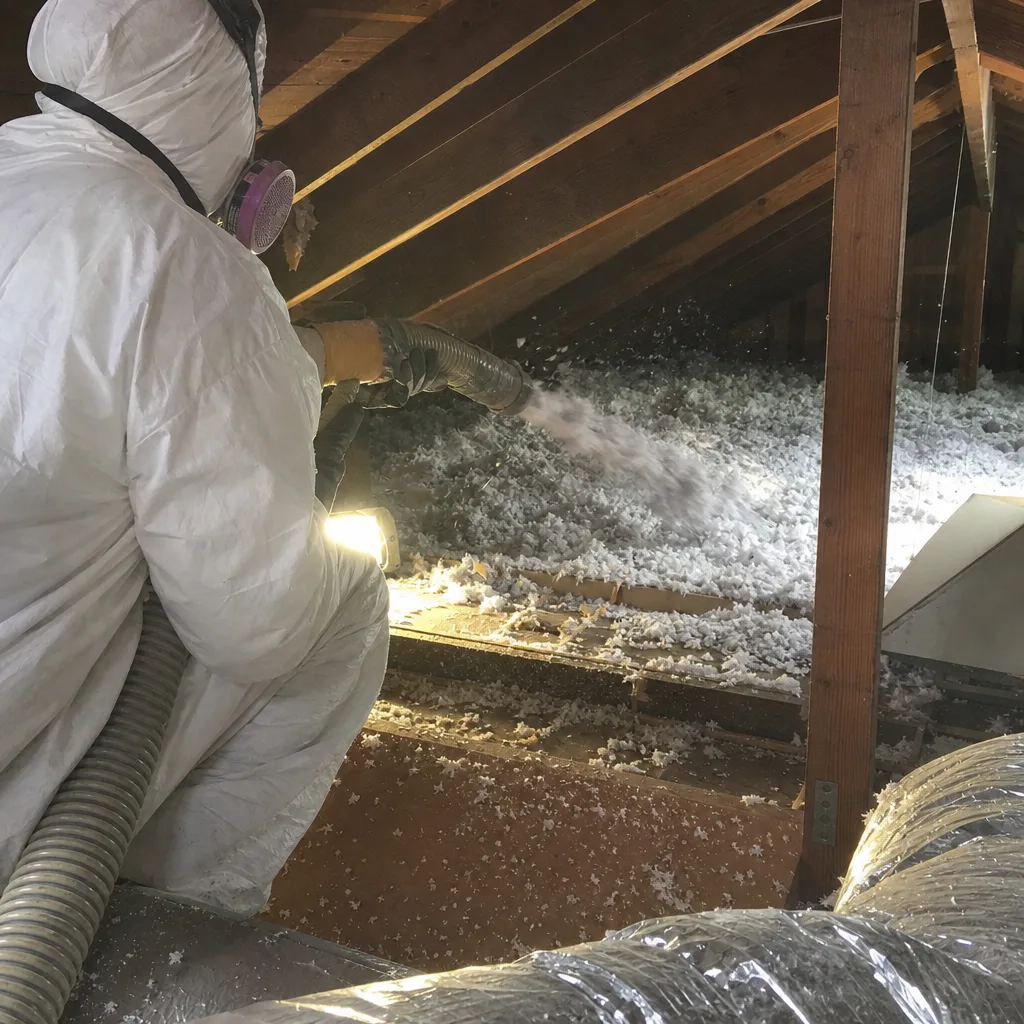
Here’s the thing about radiant barrier: it doesn’t fail loudly. No grinding noise, no visible crack. It fails quietly, by delaminating, tearing at the staples, or getting coated in dust until the reflective surface stops reflecting. By the time you feel it, the barrier has been underperforming for months. If you have CertainTeed product in your attic and your upstairs rooms run 8 – 12 degrees warmer than downstairs on a July afternoon, this page will tell you exactly what’s going on, what it costs to fix, and how fast we can get to it.
Which CertainTeed Models This Applies To
CertainTeed doesn’t sell radiant barrier as a standalone consumer product the way they sell insulation batts. Their radiant barrier comes as a foil facing bonded to their insulation products, or as a separate roll product sold through their building materials distribution. The two most common installations we see in San Diego attics are single-sided foil (foil on one face, kraft or scrim on the back) and double-sided foil (foil on both faces, usually over a woven scrim core). Single-sided goes against the attic floor with the foil facing down toward the living space. Double-sided typically gets stapled to the underside of the roof rafters.
If you have the original packaging or a label, look for a product code that starts with “CT” or references “CertainTeed MemBrain” or their radiant barrier sheathing. If the label is gone, measure the roll width. CertainTeed radiant barrier typically comes in 48-inch and 60-inch widths. The 48-inch rolls are what we see in most San Diego track homes built in the 1990s through the early 2010s. The 60-inch width shows up more in custom builds and newer construction. Getting the width right matters because seams are where radiant barrier fails first. Using the wrong width means more seams, which means more failure points.
We recommend CertainTeed’s own material when the rest of your attic already has CertainTeed insulation. When it doesn’t, we stock Reflectix as a quality equivalent that performs comparably and often costs less per square foot. Both are in our trucks. Neither is a downgrade.
One honest note up front: Laurel Attic Insulation San Diego is an independent service provider. We’re not affiliated with CertainTeed. We install their products because we’ve tested them against the alternatives and they hold up in coastal and inland San Diego heat. That’s our call, not a corporate partnership.
Signs Your CertainTeed Radiant Barrier Installation Is Failing
- Upstairs rooms run consistently warmer than downstairs even with AC running. Radiant barrier reflects heat before it enters the living space. When it fails, that heat loads directly onto your insulation and through your ceiling. The delta between floors is usually the first thing homeowners notice.
- The foil face is dull, dusty, or hazy instead of shiny. Radiant barrier works by reflecting radiant heat off a low-emissivity surface. Dust accumulation kills that reflectivity. In San Diego’s dry climate, this is the most common failure mode we see, especially in attics with unsealed venting.
- You can see tears, sagging, or staple pull-out when you look up from the attic access. Gravity plus heat cycling works staples loose over time. Once a section sags and the barrier drapes away from the rafter, it loses its air gap and stops functioning as designed.
- Your AC runs noticeably longer to hit the same setpoint. This isn’t just an inconvenience, it’s a measurable change in heat gain. If your runtimes jumped 20 to 30 percent over a summer, the barrier isn’t doing its job.
- You found foil fragments in your attic insulation or around your roof sheathing. Delamination happens in older installations where the foil separates from the scrim backing. Once that bonding goes, the product is done. No repair restores it.
Replacement Cost & What’s Included
For a typical San Diego attic of 1,200 to 1,800 square feet, full radiant barrier replacement runs $1,400 – $3,200 installed. Smaller attics and single-room retrofits can come in under $1,000. A full two-story home with a steep roof pitch and limited attic access can push past $3,500. Here’s what drives the range: attic accessibility (walkable attics are faster and cheaper than crawl-only), whether we’re removing old failed material or installing over a clean surface, and whether you have single-sided floor application or double-sided rafter application.
What you get with that price: the material, full removal of failed barrier if needed, installation with properly spaced staples (that’s a real quality point, which we’ll get to below), and a written guarantee on the work. Every job comes with a written price before we start, the 365-Day Done Right Promise on workmanship, and a free second visit if the repair fails. You’ll get before-and-after photos and a digital invoice you can pay from your phone. No surprises at the door.
DIY or Call Us?
Attic work in San Diego is hot, tight, and harder than it looks from a YouTube video. You can absolutely shine a flashlight up through your attic access and check for tears, sagging, and dust buildup. That’s smart, and it’ll help you know what you’re dealing with. What we don’t recommend is a full DIY install. Radiant barrier only works with a proper air gap, which means precise staple spacing and tension. Too tight and it tears at the fasteners. Too loose and it sags against the sheathing, which kills the reflective function. Doing it wrong in a San Diego attic in August is a fast way to spend a weekend covered in fiberglass and still need a pro to fix it.
If you’re on the fence, call (619) 793-3676 and tell us what you’re seeing. We’ll give you a straight answer on whether it’s worth doing now or can wait. Estimates are free, and we won’t sell you a job your attic doesn’t need. Good insulation doesn’t announce itself, you just stop noticing your energy bill.
FAQs
In San Diego’s climate, CertainTeed radiant barrier typically lasts 15 to 22 years before the reflective surface degrades enough to matter. Coastal attics with marine air tend to cause faster corrosion of the foil face. Inland attics in East County and the 15 corridor see more heat cycling on the scrim, which leads to staple pull-out and sagging before the foil itself fails. If your install is over 15 years old and you’re seeing symptoms, replacement is usually the right call rather than patching. Call (619) 793-3676 and we can tell you what you have and what’s left in it.
Small tears can be patched with foil tape made specifically for radiant barrier. That’s a legitimate fix for isolated damage. What can’t be repaired is delamination, widespread dust contamination, or sagging that affects large sections. In those cases, patching is throwing money at a product that’s reached the end of its service life. We’ll tell you which situation you have, because the wrong call costs you money either way.
Most CertainTeed radiant barrier installations in San Diego take 3 to 6 hours for a standard single-story attic. A two-story home or a full removal-and-replace job can run a full day. We schedule a live arrival time, not a four-hour window, so you know exactly when we’re showing up. You’ll get photo updates before and after.
Yes. Our trucks carry 48-inch and 60-inch CertainTeed-compatible radiant barrier rolls, plus Reflectix as an equivalent alternative. That means most jobs are completed in one visit without a supply house run. If you have a specific CertainTeed product you want matched, tell us when you call and we’ll confirm we have it loaded before we arrive.
If your radiant barrier is shot and your San Diego attic is cooking, call (619) 793-3676 for a free estimate. Chase Whitaker and the crew at Laurel Attic Insulation San Diego will give you an honest read, a written price, and a straight answer on what your attic actually needs.
Written by Chase Whitaker, Owner, Laurel Attic Insulation San Diego at Laurel Attic Insulation San Diego, serving San Diego and nearby areas.