
Rockwool Attic Air Sealing: The San Diego Owner’s Guide
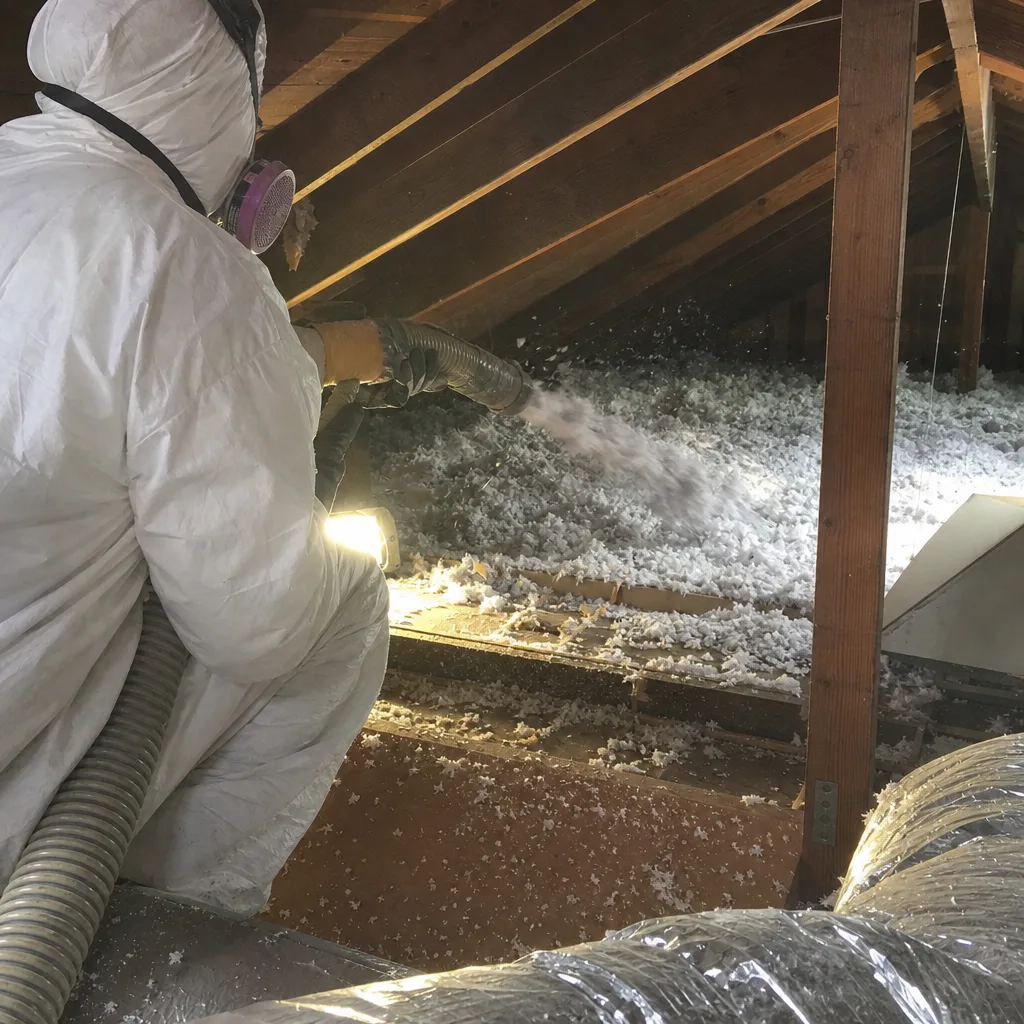
If you’re looking for Rockwool attic air sealing in San Diego, we stock compatible sealing materials on our trucks and install them same-day in most cases, with typical jobs running $450 – $950 for labor and materials combined. Most homeowners discover the problem the same way: a bedroom that won’t hold temperature, a spike in the SDG&E bill, or dust showing up on the ceiling drywall in one corner of the house. Rockwool itself rarely “fails” as a product – what fails is the air sealing around it, where gaps in top plates, can lights, chase ways, and attic hatches let conditioned air leak straight up into the vented attic.
Which Rockwool Models This Applies To
Attic air sealing isn’t model-specific in the way a furnace part is, but the compatibility question is real: Rockwool batts and boards come in different densities and widths. Rockwool Comfortbatt and Safe’n’Sound batts are sized for 16-inch and 24-inch on-center framing, while Rockwool Comfortboard comes in rigid sheets designed for exterior and attic application. The air sealing materials we use – foam sealant, caulk, weatherstripping, and metal flashing – need to be compatible with Rockwool’s mineral wool fibers, which are dense and fire-resistant. Standard single-component spray foam bonds fine to mineral wool. What does NOT bond well is vinyl-based caulk, which can dry and pull away from Rockwool’s fibrous surface within two to three summers in San Diego’s temperature swings.
Laurel Attic Insulation is an independent installer, not affiliated with Rockwool. We stock OEM Rockwool packing and gap-fill materials plus quality aftermarket equivalents where the OEM product is marked up for the label. If you know the product you have – Comfortbatt R-30, Comfortbatt R-38, or Safe’n’Sound – tell us when you call and we’ll match the sealing approach to what’s already in your attic.
Signs Your Rockwool Attic Air Sealing Is Failing
- Dust on the ceiling drywall. Air moving through gaps pulls insulation fibers and dust into the living space. When you see grayish streaks around a ceiling fixture, you’re looking at an air leak drawing filtered air through your Rockwool.
- One room hotter than the rest. A failed seal around a top plate or a recessed can light lets attic air – which hits 120°F or more in a San Diego summer – press down into that one room. The Rockwool is still there. The seal isn’t.
- Bathroom fan moisture showing up in the attic. If the ceiling penetration around a bath fan was never sealed properly, humid air leaks into the attic instead of going out the vent. In San Diego’s coastal humidity zones – La Jolla, Point Loma, Ocean Beach – that moisture can condense on the cool side of your Rockwool and trigger mold.
- Attic hatch won’t sit flush. A sagging or warped attic access is a cheap, common failure point. The weatherstripping delaminates, the door bows, and the seal gap is often a half-inch of pure bypass – heat pours through it in July.
- Air handler noise louder than it used to be. If your air conditioning sounds like it’s working harder and the noise seems louder, the plenum may have pulled loose from a sealed chase. What you’re hearing is conditioned air escaping through a gap that sealing used to close.
Replacement Cost & What’s Included
Rockwool attic air sealing in San Diego typically runs $450 – $950 installed, depending mostly on square footage, attic accessibility, and how much the ductwork or framing fights us during sealing. A smaller single-story home in Clairemont or Normal Heights with a standard 4/12 pitch usually lands at the lower end. A larger two-story with a deep soffit overhang – common in newer builds around Scripps Ranch and Carmel Valley – takes more time and material at higher reach, pushing toward the higher end.
Every job includes a written price before any work starts, labor and materials broken out line by line. We don’t charge extra for the written quote, and the price doesn’t change at the door. The work is covered by our 365-Day Done Right Promise in writing – if the seal fails within the year, we come back and correct it at no charge. That includes a free second visit if something isn’t holding.
DIY or Call Us?
You can absolutely inspect your attic sealing without calling anyone. Look at the top plates – the horizontal boards where the wall meets the attic floor. Run your hand along them. If you feel a draft, you’ve found a gap. Check around any recessed lights and bathroom fan housings for daylight peeking through from below. Those are the joints that fail first, usually because the house has settled through a few Southern California winter rains and summer heat waves.
Here’s where DIY runs into trouble: foam sealant in a hot attic cures fast, and once it cures in the wrong spot it’s hard to remove without damaging the Rockwool batt around it. Working overhead on a ladder in an unventilated attic in August is genuinely dangerous – heat exhaustion sets in faster than people expect. And if you seal the wrong bypass – say, an old recessed can that isn’t IC-rated – you can create a fire hazard. Recessed light cans need rated covers and enough clearance for the fixture’s heat to dissipate. Get that wrong and the inspection fails, or worse. If you’re not sure what’s IC-rated or where your thermal border actually is, call (619) 793-3676 and we’ll come look. The estimate is free.
FAQs
Properly installed foam and caulk sealing around Rockwool should last 10 to 15 years in San Diego’s climate before the sealant starts to crack and pull away at the joints. The Rockwool itself lasts the life of the house – it’s the sealant that ages. Coastal salt air accelerates the breakdown on the west side of the 5, so homes in Pacific Beach and Mission Beach may see faster deterioration with window and door seals specifically.
Almost always repair is the right call. If more than a third of the sealing points have failed or the original work was sparse to begin with, a full re-do of the seal line is more cost-effective than chasing individual failures. We’ll tell you straight which one applies – if the existing sealing has been there for 20 years and it’s cracking at every top plate, re-doing it is cheaper than parting it out.
Most Rockwool attic air sealing jobs in San Diego are done in four to six hours. Larger homes with complex rooflines and hard-to-reach chase ways can push into a second day. We give you a live arrival time before we come, so you’re not blocking out a four-hour window on speculation.
Yes. Our techs carry foam sealant, acoustical caulk, high-temperature sleeve kits for recessed cans, and weatherstripping sized for standard attic hatches. For Rockwool-specific trim and gap-fill, we carry OEM-equivalent materials plus options from Reflectix and other brands we stock. If we need something unusual for your build, we’ll tell you before the work starts, and the price is already in the written quote. Call (619) 793-3676 for an exact quote – the estimate is free and takes about 15 minutes.
Good insulation doesn’t announce itself – you just stop noticing your energy bill. That’s the outcome we aim for on every Rockwool attic sealing job in San Diego. Chase Whitaker has been installing and upgrading insulation for over a decade, trained at Los Angeles Trade-Technical College in building construction and weatherization, and his crew has worked everywhere from Hillcrest bungalows to new builds out near Miramar. San Diego’s housing stock holds no surprises for him – and he’ll tell you exactly what’s happening in your attic, what it costs, and what you don’t need to pay for. Call us at (619) 793-3676 and we’ll get your attic sealed right the first time.
Written by Chase Whitaker, Owner, Laurel Attic Insulation San Diego at Laurel Attic Insulation San Diego, serving San Diego and nearby areas.