
Rockwool Insulation Removal in San Diego: What to Know First
Rockwool insulation removal in San Diego typically runs $1,200 to $3,800 depending on attic size, accessibility, and how long the material has been sitting. Most residential jobs are completed in one day, and we always deliver a written price before any work starts. We’re an independent Rockwool service provider, not a manufacturer-authorized contractor, which means we call problems as we see them and never push a brand-specific upsell you don’t need.
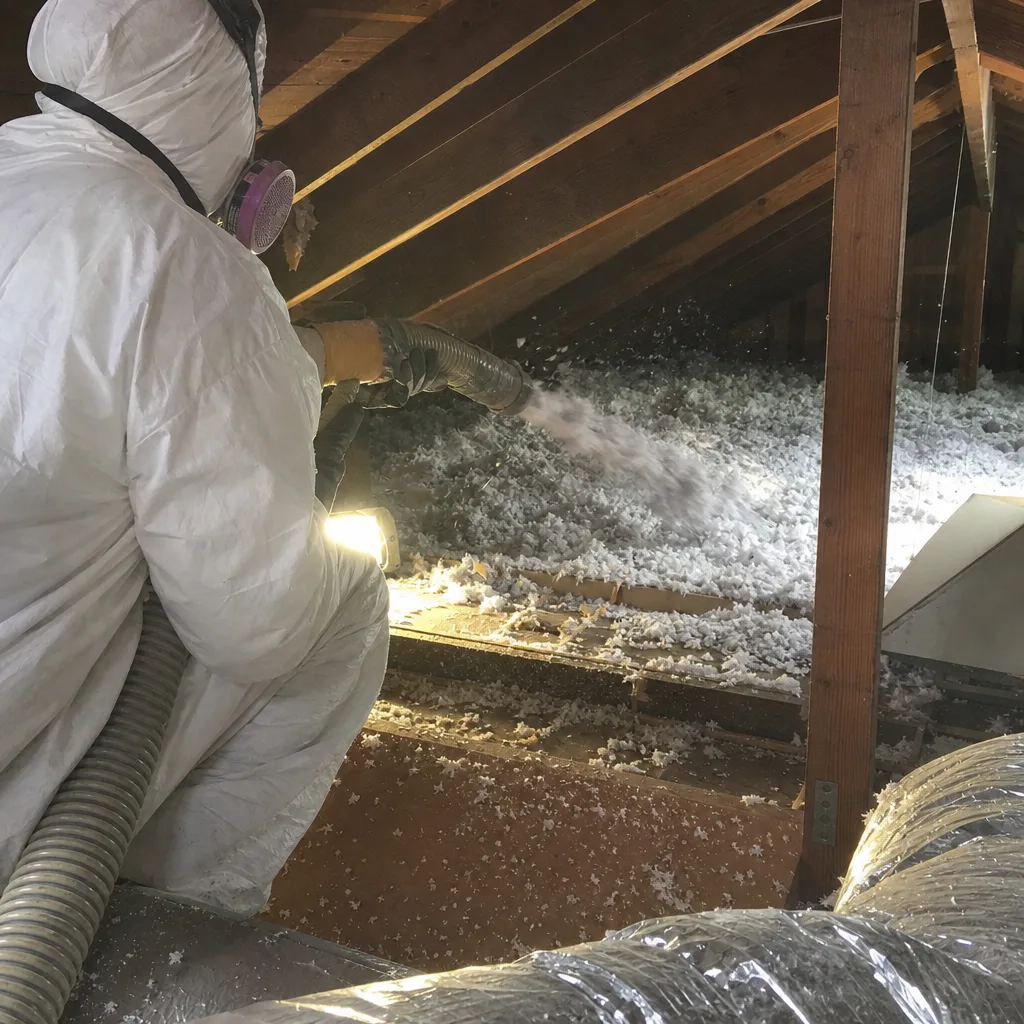
If you own a San Diego home with Rockwool insulation that has gotten wet, settled, been chewed through by rodents, or simply aged past its useful life, this page covers what actually goes wrong with the product, what removal costs here, and how the whole job works. Call (619) 793-3676 to talk to a live person, any hour, day or night.
How Rockwool Products Fail – and How We Fix Them
- Rockwool ComfortBatt R-15 moisture saturation. ComfortBatt is a stone wool batt designed for 2×4 wall cavities, but in San Diego’s coastal zones we routinely find it used in attics where marine-layer humidity gets trapped against the underside of the roof deck. Stone wool sheds liquid water but holds vapor longer than people expect. Once it stays damp through a full winter, it compresses under its own weight and loses R-value fast. The fix is full removal of the saturated batts, a dry-out of the cavity, and a re-insulation plan matched to our actual climate, not a generic chart.
- Rockwool Safe’n’Sound rodent colonization. Safe’n’Sound is marketed as a fire-and-sound batt for interior walls, but we find it stuffed into San Diego attics more than any other Rockwool line. Its open fiber structure is unfortunately ideal nesting material for roof rats, which are a real and persistent problem in neighborhoods from North Park to Clairemont. Once rodents get in, the material becomes a health issue and a fire hazard. We remove it with full PPE, HEPA-filtered vacuums, and then identify the entry points before anything new goes in.
- Rockwool HardRock board degradation in flat-roof applications. Older San Diego homes and mid-century builds often have Rockwool HardRock rigid boards above the ceiling plane. The foil facing delaminates after years of heat cycling, and the board itself can crumble when disturbed. We’ve pulled HardRock out of homes near SDSU that was installed in the 1980s and had turned to dust in sections. Removal requires controlled extraction so the crumbled product doesn’t spread through the living space.
- Improperly installed Rockwool Flexi batts around recessed lighting. Flexi is Rockwool’s older flexible batt line, and we see it in San Diego homes built in the 1990s and early 2000s. The problem is almost always clearance: someone pushed the batts right up against non-IC-rated can lights, creating a genuine fire risk that’s been sitting there for twenty years. This is one of the more dangerous things we find in attics, and it’s why we don’t recommend DIY removal. You don’t know what’s touching what until you’re up there.
- Rockwool Delta board water damage from failed roof penetrations. Delta is a high-density board used on the exterior side of some San Diego homes, but when a plumbing vent boot or chimney flashing fails, water tracks straight into it. The board soaks up the water, holds it against framing, and rots the structure behind it. Removal means cutting out the damaged sections without disturbing the sheathing beneath. We do board extraction carefully because the line between insulation and structural support gets blurry when rot is present.
Our Rockwool Insulation Removal Process
Every Rockwool removal job follows the same disciplined sequence. Here’s what happens from the moment you call:
- 1
Discovery call with a live person. You reach us directly, not a voicemail queue. We ask about your attic size, the age of the Rockwool, and whether you’ve had pest or moisture issues. That gives us enough to prepare the right crew and equipment.
- 2
Written quote before work starts. We don’t estimate over the phone and revise at your door. We assess the attic, then hand you a line-item price covering removal, disposal, and any prep for new insulation. That number is what you pay.
- 3
Containment setup. We seal off the attic access and work area using plastic barriers, so Rockwool fibers and dust don’t drift into your living space. This matters especially for older material that has started to break down.
- 4
Extraction with HEPA filtration. We use commercial vacuum systems with HEPA filters to remove batts, loose material, and fine particulates. The filled bags are sealed and removed from the home, not dragged through your kitchen.
- 5
Inspection and prep for replacement. Once the Rockwool is out, we inspect the attic deck, look for pest entry points, check ventilation, and note anything that needs addressing before new insulation goes in. If you’re going back with fresh material, we give you options from our brand lineup and explain the R-value math in plain terms.
- 6
Final walkthrough and written guarantee. You get photo proof of the completed removal, a digital invoice, and a written 365-Day Done Right Promise. If it’s not right, we make it right. Free second visit if anything fails in that year.
What Rockwool Insulation Removal Costs in San Diego
Here are the real numbers for Rockwool removal jobs we handle across San Diego, from Chula Vista up to Escondido:
- Standard attic Rockwool batt removal, up to 1,200 sq ft: $1,200 to $2,200
- Larger attics or two-story homes, 1,200 to 2,500 sq ft: $2,200 to $3,800
- Rodent-contaminated Rockwool removal with sanitation: add $400 to $900 depending on severity
- HardRock or Delta board removal from flat or cathedral ceilings: $1,800 to $4,000 depending on access and structural condition
The price moves based on attic square footage, how deteriorated the material is, access difficulty, and whether rodent cleanup or sanitation is involved. Every quote includes disposal, all labor, and the guarantee. Call (619) 793-3676 for an exact written quote on your San Diego home. Estimates are free.
Why San Diego Homeowners Call Laurel Attic Insulation San Diego for Rockwool Work
We’re the insulation arm of the Relay Home Co. family, founded in 2003, and we’ve spent more than two decades working in San Diego attics. Our technicians are background-checked and uniformed, and they show up at a live, trackable time, not a four-hour window. You get before-and-after photos of every job, so you see what came out and what went in.
Chase Whitaker, our owner, trained in building construction and weatherization at Los Angeles Trade-Technical College and has been running insulation crews for well over a decade. He’s worked on San Diego homes from Hillcrest bungalows to newer builds in Miramar, so when we tell you your Rockwool needs to come out, it’s because we’ve seen the same failure mode in your exact neighborhood. We also service Reflectix and carry eight other manufacturer brands, so if Rockwool isn’t the right replacement for your attic, we’ll match the material to the job, not to whatever happens to be on the truck. As Chase puts it: “Good insulation doesn’t announce itself – you just stop noticing your energy bill.”
FAQs
Replacement is almost always the better financial call once Rockwool has been wet, pest-damaged, or has lost its loft. Attic insulation loses R-value as it compresses, and spot-repairing around damaged areas means your attic has inconsistent thermal performance. We’ll tell you straight if your material can be salvaged, but for most San Diego homes with failed Rockwool, full removal and fresh installation costs less over five years than chasing problems. Call (619) 793-3676 and we’ll assess yours.
Stone wool’s fire resistance stays intact as a material property, but contaminants like rodent nesting, dust accumulation, and stored items packed against the material change the real-world fire equation. We’ve also seen Rockwool batts installed too close to non-IC can lights, which is a serious hazard regardless of the insulation’s rated performance. During removal, we identify those clearance violations and correct them before anything goes back in.
Most single-family attic removals are done in one day. Larger homes, heavily contaminated material, or board-based Rockwool products can stretch to two days. We schedule around your availability and give you a live arrival window, not a vague “sometime Tuesday.” Call (619) 793-3676 and we’ll give you a realistic timeline based on your attic.
Yes, and you don’t need to identify anything yourself. The different Rockwool lines – ComfortBatt, Safe’n’Sound, Flexi, HardRock, Delta – are visually distinct to a trained eye, and we’ll figure out what you have the moment we’re in the attic. What matters is whether the material is wet, compressed, pest-contaminated, or otherwise compromised. We’ll tell you what’s up there and what it costs to remove.
Yes, pest inspection is part of every removal job. San Diego roof rats and mice are the biggest contributors to Rockwool failure we see, and pulling the material out is the only way to really assess the extent of the damage. We document entry points, recommend sealing, and give you a written report so you know what happened and how to keep it from recurring. Call (619) 793-3676 and we’ll talk through what’s involved.
Written by Chase Whitaker, Owner, Laurel Attic Insulation San Diego at Laurel Attic Insulation San Diego, serving San Diego and nearby areas.