
Rockwool Attic Insulation: The San Diego Owner’s Guide
We stock and install Rockwool attic insulation throughout San Diego, with most full-attic Rockwool upgrades running between $1,800 and $4,600 depending on square footage and R-value target. Same-day and next-day install slots are available most weeks, and we carry Rockwool batts on our trucks so there’s no second trip to a supply house. Most San Diego homeowners realize their Rockwool insulation has failed when upstairs rooms start cooking in August or the AC runs constantly without holding temperature. That’s the moment to look up, because what’s in the attic is usually the answer.
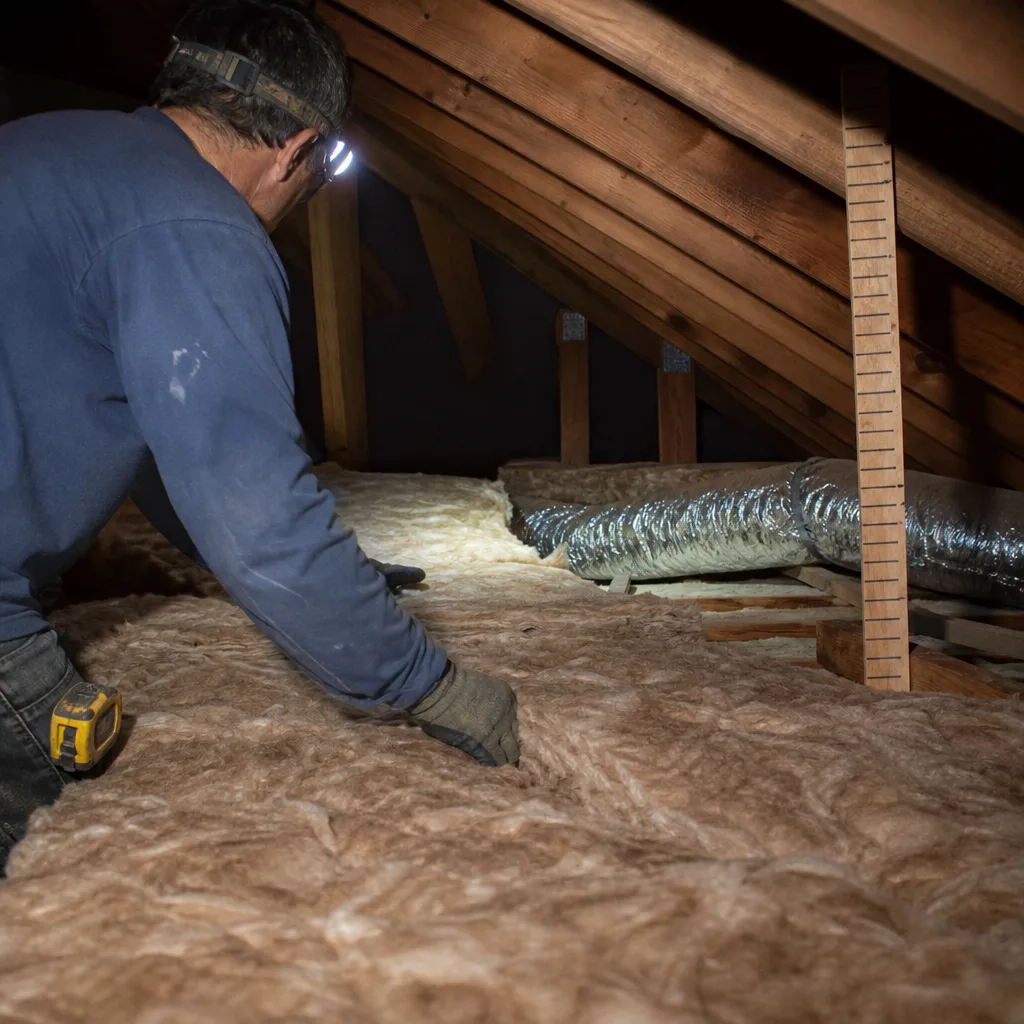
Rockwool (the brand now known as ROCKWOOL, formerly Roxul) makes stone wool insulation that works differently than fiberglass. It’s denser, blocks sound better, and holds its shape in San Diego’s dry heat. But it’s not indestructible. Rodents tear through it, roof leaks turn it into a matted mess, and old installs settle or get walked on by contractors running cable or ductwork. When that happens, the R-value you paid for is gone, even if the batts still look roughly okay from the hatch.
Which Rockwool Models This Applies To
Rockwool attic insulation comes in a few product lines, and the compatibility details matter when you’re matching existing material. The most common products we see in San Diego attics are Rockwool Comfortbatt (R-15, R-23, and R-30, sized for 16″ and 24″ on-center framing), Rockwool Safe’n’Sound (acoustic batts, typically used between floors and interior walls, sometimes misapplied in attics), and Rockwool Comfortboard 80 (rigid boards used in specific vented attic assemblies). If you’re topping up an existing fiberglass or cellulose layer, R-30 Comfortbatt is the workhorse we install most.
One gotcha that surprises San Diego homeowners: Rockwool batts are cut to fit friction-tight, and a 16-inch batt in a 24-inch bay doesn’t just underperform, it sags and gaps within a season. We see this constantly in older Clairemont and Allied Gardens homes where a previous installer used whatever was on the truck. Another thing to know: Rockwool is a stone-wool product, not fiberglass, so it doesn’t irritate skin the same way, but it does shed fine dust during handling. For repairs and top-ups, OEM Rockwool is our default because the density spec (typically 2.4 to 4.4 pounds per cubic foot depending on the product) is consistent. Aftermarket stone-wool equivalents exist, but we’ve found the density and sizing tolerances are looser, and loose tolerances defeat the friction-fit design.
Laurel Attic Insulation San Diego is an independent service provider and not affiliated with Rockwool or the ROCKWOOL Group. We install their products because they perform, not because we’re tied to a brand program.
Signs Your Rockwool Attic Insulation Is Failing
- Upstairs rooms run 8 – 12 degrees hotter than downstairs in summer. This usually means the Rockwool layer has been compromised in spots, often by foot traffic or rodent activity. Stone wool doesn’t settle like loose-fill fiberglass, so heat gain this dramatic points to gaps or displaced batts rather than simple aging.
- You can see daylight through attic vents from inside the living space. Insulation that’s been shoved aside during a remodel, or never properly fit around recessed lights and junction boxes, leaves a direct path for heat and cold air to move freely.
- Rodent droppings, nesting material, or burrowed tunnels along the batts. Rats and mice love stone wool for nesting. They tunnel through it and create channels that vent your conditioned air straight into the attic. This is the single most common failure we repair in San Diego neighborhoods with mature landscaping and fruit trees.
- Energy bills climbed year over year without a rate increase. If your kWh usage on SDG&E bills trended up while the thermostat setting stayed the same, you’re losing conditioned air. In San Diego’s marine-layer microclimates, attics cycle through damp and dry conditions that accelerate the breakdown of insulation that’s already been disturbed.
- The batts look flattened, water-stained, or dark in patches. Rockwool resists moisture better than fiberglass, but a slow roof leak or condensation from a disconnected bath fan still degrades it. Once stone wool gets packed down or crusted, it loses its loft and its R-value drops with it.
Replacement Cost & What’s Included
In San Diego, here’s what installed Rockwool attic insulation actually costs, based on the jobs we price most weeks:
- Partial repair or section replacement: $400 – $900, depending on access and how many batts need pulling. We’re usually in and out in under three hours.
- Top-up over existing insulation: $1,200 – $2,800. Most of these are R-30 Comfortbatt laid over an existing layer to bring an older home up to current code recommendations for San Diego’s climate zone.
- Full attic removal and new Rockwool install: $2,800 – $4,600 for a typical 1,200 – 1,800 square foot attic. Removal adds labor, and San Diego attics with low clearance or vermiculite presence push that number toward the top.
Every quote includes a written line-item price before work starts, so the number on your phone is the number you pay. That’s the Relay Standard: we hand you a written price, you approve it, we work. No same-day upcharges. Every Rockwool install from Laurel carries our 365-Day Done Right Promise in writing. If the insulation doesn’t perform as specified within a year, we come back and fix it at no charge. If it fails again, you get a free second visit. That’s the deal, and it’s printed on every invoice.
DIY or Call Us?
Rockwool batts are one of the friendlier insulation products to handle. They cut cleanly with a serrated blade, don’t itch like fiberglass, and friction-fit into standard joist bays without stapling. If you have an open attic with good access and want to replace a few displaced batts yourself, that’s a reasonable Saturday job. A respirator or N95 mask and long sleeves are still worth the effort because stone-wool dust will make you cough if you inhale it for an hour.
Where DIY goes wrong in San Diego is rarely the material. It’s the attic itself. Low-pitched roofs, recessed can lights, old knob-and-tube wiring, and ductwork that’s been patched five times make attics complicated. Insulation can’t be in contact with certain light fixtures, and baffles need to keep airflow moving from soffit vents to ridge vents or you’ll create moisture problems. Tucking batts around attic-mounted AC equipment is another spot we see mistakes: blocked access panels and pinched condensate lines. If any of that describes your attic, call us at (619) 793-3676. We’ll come look, tell you what’s needed, and give you a written price. You decide from there.
FAQs
Rockwool attic insulation, installed correctly and kept dry, lasts 30 to 50 years without meaningful R-value loss. What shortens that lifespan in San Diego is rodent traffic, roof leaks, and repeated foot traffic from contractors working in the attic, not the material itself. Stone wool doesn’t decompose or settle the way cellulose does.
Yes, if damage is localized. We pull the affected batts, repair whatever caused the problem (rodent entry, leak, displaced baffle), and install new Rockwool in that section. Most repair jobs run $400 – $900 in San Diego. Call (619) 793-3676 with photos and we’ll give you a straight answer on whether repair or replacement makes more sense.
A partial repair takes 2 – 4 hours. A full attic removal and Rockwool reinstall in San Diego typically takes one day for homes up to about 1,800 square feet. We arrive at a live, trackable time, not a four-hour window, and send before-and-after photos so you can see the work without climbing a ladder.
We stock Rockwool Comfortbatt in R-15, R-23, and R-30 in both 16-inch and 24-inch widths, plus Rockwool Safe’n’Sound. We also carry Reflectix radiant barrier for San Diego attics where heat gain through the roof deck is the dominant problem. Most jobs are completed same-visit without a supply house run.
Get a Straight Answer on Rockwool for Your San Diego Attic
If your Rockwool insulation is failing, you don’t need more research, you need someone who can look at the attic and tell you what’s what. We answer the phone 24/7, we come out when we say we will, and you get a written price before any work starts. That’s how we run every job, from a small section repair in a North Park bungalow to a full removal and reinstall in a Scripps Ranch two-story. Call (619) 793-3676 or book online and we’ll get you on the schedule. Good insulation doesn’t announce itself – you just stop noticing your energy bill. That’s the goal, and we back it in writing.
Written by Chase Whitaker, Owner, Laurel Attic Insulation San Diego, serving San Diego and nearby areas.