
Knauf Attic Air Sealing: The San Diego Owner’s Guide
We stock and install Knauf-compatible attic air sealing in San Diego, with most jobs running $450 – $950 installed depending on attic size and how much of the existing seal has failed. Same-day service is available across most San Diego neighborhoods, and every job comes with a written price before we start. Most homeowners discover they have a problem the hard way: a bedroom that won’t hold temperature, a utility bill that climbed 18% over the same month last year, or dust showing up on ceiling fans faster than it used to. Knauf’s sealing products are solid gear, but San Diego’s dry heat and coastal humidity swings put real stress on the adhesives and foam gaskets over time. When they fail, the fix is usually faster and cheaper than people expect, provided you catch it before unconditioned attic air really starts moving through the gaps.
Key takeaways:
- Knauf attic air sealing installed in San Diego typically costs $450 – $950, parts and labor included
- We carry Knauf-compatible sealing materials on the truck, so one visit usually handles it
- Failure signs are predictable: room temperature drift, dust, and higher cooling bills
- Every job includes a written price, a 365-day workmanship guarantee, and a free second visit if the repair fails
Which Knauf Models This Applies To
Knauf makes several air sealing product lines, and most of what we see in San Diego attics falls into three groups: the EcoSeal water-based sealant, the JetStream sealant line, and Knauf’s foam gasket products used around attic hatches and can light housings. If your attic was insulated with Knauf blown-in fiberglass or batts, the air sealing was likely done with EcoSeal, which comes in 5-gallon pails and is applied as a spray that cures to a flexible, paintable membrane. JetStream is the newer formulation, and it cures faster, which matters in San Diego because our low humidity can actually slow the cure time of older EcoSeal, especially in the winter months when the marine layer hangs around.
The compatibility gotcha most people hit: not just any air sealant works with Knauf insulation. Off-the-shelf latex caulk dries rigid and will crack under the thermal cycling we get from San Diego’s hot days and cool coastal nights. If you’re trying to match the right product, look for the Knauf product label on the pail or ask us to check the existing seal’s flexibility. The OEM-vs-aftermarket decision for Knauf is simpler than it sounds: Knauf sealants are mid-priced and widely available to installers, so there’s rarely a cost savings in going aftermarket. We use Knauf-matched products when the attic has Knauf insulation because the chemistry is designed to work together, and we’re not interested in putting a mismatched product in just to shave $60 off a job.
Signs Your Knauf Attic Air Sealing Is Failing
- Specific rooms won’t hold temperature. The room directly under your attic hatch or over the garage tends to drift first. Gap seal failure lets attic air (which can hit 140°F in a San Diego summer) leak through the ceiling plane, and the effect is usually concentrated in one or two rooms.
- Dust appears faster than before. Air sealing isn’t just about temperature. It blocks the fine particulate that moves from your attic through every crack and fixture opening. When the seal degrades, you’ll notice ceiling fans and light fixtures collecting a film of dust within a week or two of cleaning.
- Your cooling bill is up without a rate change or hotter weather. Compare same-month usage year over year. If August ran 15-20% higher kilowatt-hours than last August, and your attic hatch is older than five years, the air seal is a prime suspect. We see this pattern constantly in older San Diego homes from Clairemont to El Cajon.
- You can feel a temperature difference near the attic hatch or around ceiling can lights. On a hot afternoon, stand under the attic access. If the air feels warmer than the rest of the room, the gasket or seal around that hatch has failed. This is the single most common failure point we find.
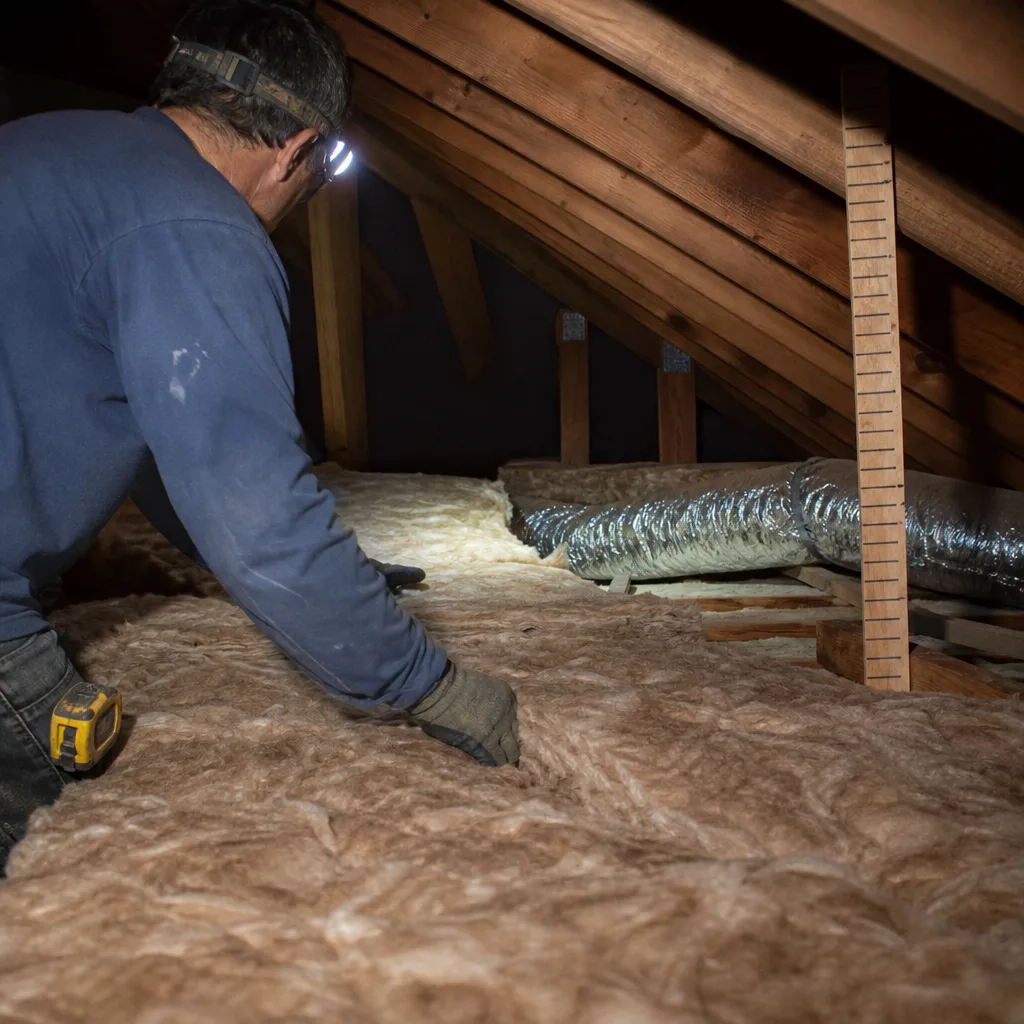
- Visible cracking or peeling at seal edges in the attic. If you can safely peek into your attic, look at the areas where sealant was applied around plumbing vents, electrical penetrations, and the hatch frame. Knauf EcoSeal should look continuous and slightly pliable. If it’s brittle, cracked, or pulling away from the framing, it’s done.
Replacement Cost & What’s Included
For a typical San Diego home with a 1,200 – 1,800 square foot attic footprint, expect to pay $450 – $950 installed for Knauf-compatible air sealing rework. The range comes down to three things: how much of the existing seal has failed and needs removal, how many penetrations and fixtures need resealing, and whether your attic hatch needs a new gasket kit. Smaller attics with limited plumbing and electrical penetrations run toward the bottom. Attics with recessed lighting, multiple HVAC drops, and a poorly sealed hatch run higher.
Parts and labor are never split into mystery line items. You’ll see exactly what you’re paying for before work starts, in writing. The job includes removing failed material where it’s still attached, cleaning the sealing surfaces, and applying Knauf-matched sealant rated for the temperature swings your attic actually experiences. Every repair carries our 365-Day Done Right Promise in writing, and if the repair fails within that year, we come back and redo it at no charge. That’s not a maybe. It’s what we put on the invoice.
DIY or Call Us?
Air sealing work lives in the awkward middle of DIY territory. It’s not dangerous in the way that high-tension garage door springs or live electrical panels are, but it’s also not the kind of job most homeowners should attempt from a ladder with a caulk gun from a big-box store. The honest split: you can safely inspect your attic hatch gasket yourself, and you can visually check for cracked sealant around visible penetrations. That’s useful diagnostic information.
What goes wrong with DIY air sealing is almost always a materials mismatch. Standard silicone or acrylic caulk dries rigid, and rigid seals crack under the expansion and contraction cycles we get in San Diego attics, where daytime attic temperatures swing 50 degrees or more from night to day in the summer. You’d fix one gap and create five future gaps. We’re an independent provider, not affiliated with Knauf, and we carry the right sealant because we do this every day, not once. If you’d rather have it done once and done right, call (619) 793-3676 and we’ll get a written price in your hand before anything starts.
FAQs
Expect 8 to 12 years of serviceable life from Knauf air sealing in San Diego’s climate. The marine layer moisture near the coast accelerates sealant aging in areas like Point Loma and Ocean Beach, while inland heat in neighborhoods like Santee and El Cajon causes more thermal expansion stress. Homes with attic temperatures that stay moderate tend to get the full life; homes with poor attic ventilation may see failure closer to year eight. Call us at (619) 793-3676 for a free assessment of your attic’s current seal condition.
Yes, in most cases we can repair failed sections rather than redoing the entire attic seal. If the failure is localized (the hatch gasket, a few can light housings, one plumbing stack), a partial repair makes sense and typically runs $200 – $400. If the seal has failed across large sections or multiple penetrations are leaking, full rework is usually more cost-effective than chasing one crack at a time. We’ll tell you which one applies to your attic, and the estimate is free either way.
A typical Knauf air sealing replacement in San Diego takes three to five hours for most homes. Larger attics with extensive failed sealant or numerous recessed lights may push it to a full day. We schedule live arrival times, not four-hour windows, so you’ll know exactly when our technician shows up. You’ll also get before-and-after photos of the work through the Relay Visibility Guarantee, which is standard on every job.
We keep Knauf-compatible sealants and hatch gasket kits stocked on our trucks, so we can handle most San Diego air sealing jobs in one visit. That includes materials for attics insulated with Knauf blown-in fiberglass or batts, as well as other brands we’ve worked with, including Reflectix. If your attic has an uncommon Knauf product line or an older formulation that requires a specific match, we’ll get it and schedule the follow-up fast, but that’s the exception, not the rule.
Get a Written Price Before You Decide
If your San Diego home has a failing Knauf attic air seal, you don’t have to guess what the repair will cost or when a contractor might show up. Call (619) 793-3676 and you’ll reach a live person, day or night, who can schedule an assessment and get you a written price before any work begins. The quote covers parts, labor, and our 365-day guarantee, in plain dollar terms, with no door-step surprises. Laurel Attic Insulation San Diego has been part of the Relay Home Co. family since 2003, and we run every job with the same standard: live arrival tracking, photo proof, and a written guarantee before we leave. Good insulation doesn’t announce itself; you just stop noticing your energy bill.
Written by Chase Whitaker, Owner, Laurel Attic Insulation San Diego at Laurel Attic Insulation San Diego, serving San Diego and nearby areas.